
If you work with scaffolding, you’ve probably heard of the “3 to 1 rule.” It sounds simple, but it’s one of the most critical safety principles in the construction industry. Ignoring it can lead to catastrophic accidents, while understanding and applying it can save lives. So, what exactly is this rule, and why is it so important? This article will break down the 3 to 1 rule for scaffolding in plain language, explaining its purpose, how to use it, and the serious risks of getting it wrong.
Before we dive into the specifics of the 3:1 ratio, let’s talk about stability. Think about a tall, heavy bookcase. If it’s narrow, it’s easy to tip over. But if it has a wide, heavy base, it’s much more stable. Scaffolding works on the same basic principle of physics. It’s a temporary structure that needs to support people, tools, and materials high above the ground. The higher it goes, the more vulnerable it becomes to forces like wind and uneven loads, which can cause it to sway or, in the worst case, tip over completely. The 3 to 1 rule for scaffolding is the fundamental guideline that prevents this from happening.
What Exactly is the 3 to 1 Rule for Scaffolding?
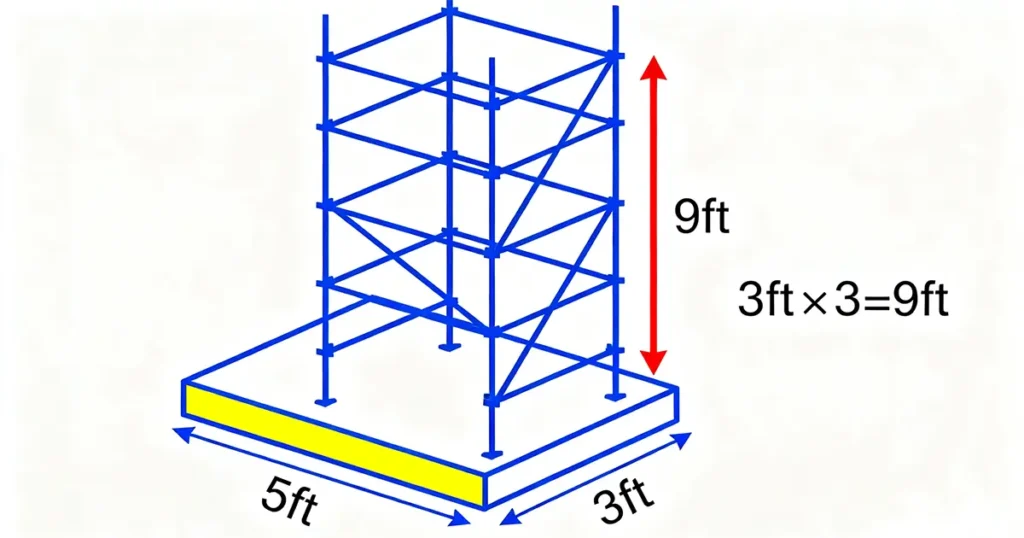
In simple terms, the 3 to 1 rule for scaffolding states that the height of a freestanding scaffold should not exceed three times the shortest base dimension.
Let’s make that even clearer. Imagine you are setting up a scaffold that is 4 feet wide at its base. According to the rule:
- Base Width: 4 feet
- Maximum Safe Height: 4 feet x 3 = 12 feet
This means your scaffold can safely be built up to 12 feet tall without needing additional support like guy wires or ties to a permanent structure. The “shortest base dimension” is crucial because scaffolds aren’t always square. If your scaffold is 5 feet long but only 3 feet wide, you must use the 3-foot width for your calculation (3 ft x 3 = 9 ft max height).
This rule is not just a good idea—it’s a formal requirement in many safety standards worldwide, including those set by the Occupational Safety and Health Administration (OSHA) in the United States.
The Science Behind the Rule: Why is the 3:1 Ratio So Critical?
The 3 to 1 rule for scaffolding isn’t a random number. It’s based on the physics of leverage and center of gravity.
Understanding the Center of Gravity
Every object has a center of gravity—a point where its weight is balanced. For a stable object, this point needs to stay firmly within its base of support. When a scaffold gets too tall relative to its base, its center of gravity rises. A high center of gravity makes the structure “tippy.” Add a worker leaning over a guardrail or a strong gust of wind, and that center of gravity can shift outside the base, causing the entire structure to topple.
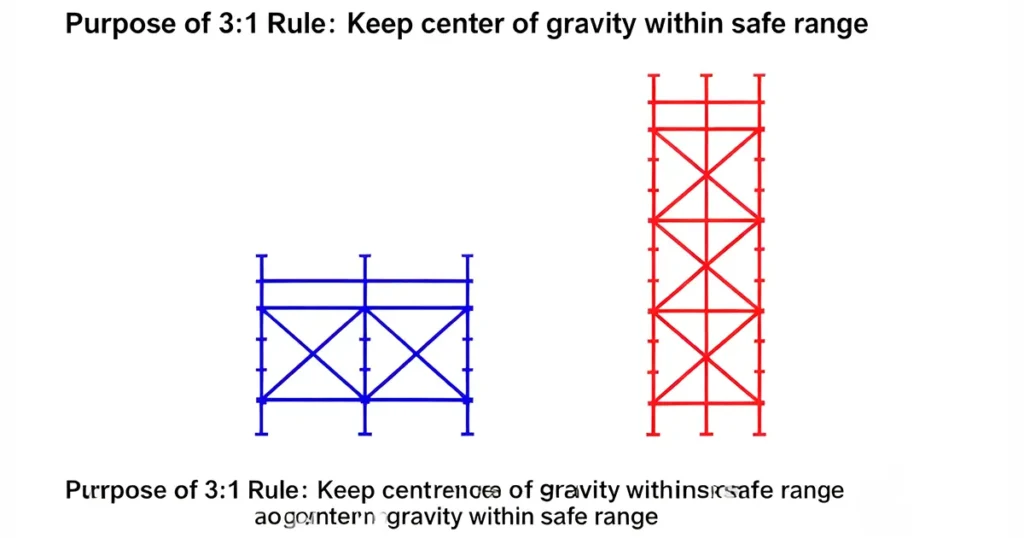
The 3:1 ratio is a carefully calculated safety margin that keeps the center of gravity low enough to resist these common forces on a job site. It ensures scaffold stability even under less-than-ideal conditions.
Counteracting Overturning Moments
When a force (like wind) pushes against the side of a tall scaffold, it creates an “overturning moment”—a powerful twisting force that tries to tip the scaffold over. The wider base provided by adhering to the 3:1 rule creates a larger “resisting moment.” Think of it as using a longer wrench to loosen a tight bolt; more leverage makes it easier. In this case, the wide base gives the scaffold more leverage to resist the twisting force and stay upright.
How to Apply the 3 to 1 Rule on Your Job Site
Knowing the theory is one thing; applying it is another. Here’s a step-by-step guide to implementing the 3 to 1 rule for scaffolding in practice.
Step 1: Measure the Shortest Base Dimension
Before you even start assembling, know your base size. Use a tape measure to find the smallest distance between the legs on one side of the scaffold. This is your critical number.
Step 2: Calculate the Maximum Safe Height
Multiply your base measurement from Step 1 by 3. This is the absolute maximum height your freestanding scaffold can reach.
Step 3: Plan for Ties and Braces
If your project requires a scaffold taller than your calculated maximum, you must install additional supports. This is where scaffold safety guidelines mandate the use of tie-ins. The scaffold must be securely tied to the permanent building or structure at regular intervals (often outlined in regulations as every 20-26 feet vertically and every 6-8 feet horizontally). Guy wires with anchors can also be used for additional bracing.
The Severe Consequences of Ignoring the 3 to 1 Rule
Disregarding this fundamental rule is a recipe for disaster. The risks are not worth the time or cost saved.
- Catastrophic Collapse: The most obvious danger is the scaffold tipping over. This can lead to workers falling from great heights, being crushed by the collapsing structure, and causing severe injuries or fatalities.
- Material Damage: The collapse will also damage the scaffold components, tools, and materials on the platform, and likely damage the building or property below.
- Legal and Financial Repercussions: Companies and individuals responsible for violating OSHA scaffolding rules face massive fines, lawsuits, project shutdowns, and increased insurance premiums. In severe cases, criminal charges can be filed.
Beyond the 3:1 Rule: Other Essential Scaffold Safety Tips
While the 3 to 1 rule for scaffolding is paramount for stability, overall safety requires a holistic approach. Always remember to:
- Use a Solid Foundation: Ensure the scaffold base plates are on firm, level ground to prevent settling or shifting.
- Inspect Before Use: Conduct a pre-shift inspection for damaged components, loose connections, and missing guardrails.
- Ensure Proper Training: Only competent and trained personnel should erect, alter, or dismantle scaffolds.
- Don’t Overload: Know the load capacity of your scaffold and never exceed it with workers, tools, and materials.
Conclusion
The 3 to 1 rule for scaffolding is a simple yet powerful safety principle that acts as the first line of defense against scaffold collapses. By limiting the scaffold height to base ratio, we dramatically increase scaffold stability and protect everyone on site. Remember, in scaffolding, there is no room for shortcuts. Always calculate, always follow the rule, and when in doubt, tie it in. Your life and the lives of your colleagues depend on it.