When choosing a scaffolding system for a construction project, two names often come up: Ringlock scaffolding and Cuplock scaffolding. Both are modular scaffolding systems that have been widely used in construction, industrial maintenance, infrastructure projects, and other applications.
Although Ringlock and Cuplock look similar at first glance, their connection systems, flexibility, installation methods, and typical applications are different.
So, Ringlock vs Cuplock scaffolding: which is better?
The answer depends on the project. Cuplock remains a reliable choice for conventional and repetitive applications, while Ringlock generally offers greater flexibility, faster assembly, and broader application possibilities for modern and complex construction projects.
In this article, we will compare Ringlock and Cuplock scaffolding in detail to help contractors, rental companies, and scaffolding buyers choose the right system.
What Is Ringlock Scaffolding?
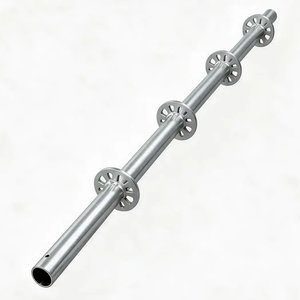
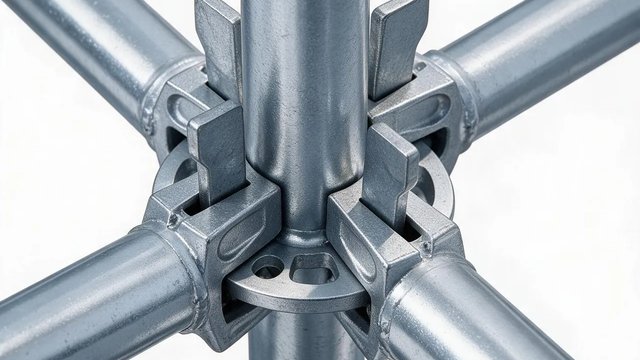
Ringlock scaffolding is a modular scaffolding system that uses rosettes and wedge pins to connect vertical standards, horizontal ledgers, diagonal braces, and other components.
A typical Ringlock system consists of:
- Ringlock standards
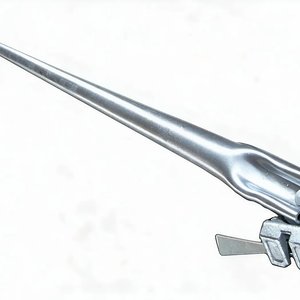
- Ringlock ledgers
- Diagonal braces
- Base collars
- Adjustable screw jacks
- Steel or aluminum platforms
- Guardrails
- Ladders
- Other scaffolding accessories
The key feature of Ringlock scaffolding is the rosette connection welded to the vertical standard.
Each rosette provides multiple connection points, allowing horizontal and diagonal components to be connected at different angles. The wedge connection can be secured quickly without conventional bolts and nuts.
This modular design makes Ringlock suitable for both standard building projects and complex structures.
How Does Ringlock Scaffolding Work?
During installation, the vertical standards are positioned at the required spacing. Ledgers are then connected to the rosettes using wedge pins.
Diagonal braces can be added to improve the stability of the structure.
Because the components are connected through a standardized modular node, Ringlock scaffolding can be assembled into different configurations according to the requirements of the project.
This flexibility is one of the main reasons Ringlock has become increasingly popular in large construction and infrastructure projects.
What Is Cuplock Scaffolding?
Cuplock scaffolding is another modular scaffolding system that uses a cup-and-blade connection.
The main components generally include:
- Cuplock standards
- Ledgers
- Diagonal braces
- Base jacks
- Base collars
- Platforms
- Guardrails
- Ladders
- Accessories
The Cuplock connection consists mainly of lower cups, upper cups, and blade-shaped ends on the horizontal members.
The blade is placed into the lower cup, and the upper cup is then secured over the connection. This creates a strong mechanical connection between the vertical and horizontal members.
Cuplock is well known for its relatively simple assembly process and has been widely used for building construction, maintenance, plastering, painting, and other conventional applications.
How Does Cuplock Scaffolding Work?
Cuplock standards are installed vertically according to the required layout. Horizontal ledgers are connected to the standards using the cup-and-blade connection.
Once the main structure has been assembled, platforms, guardrails, braces, ladders, and other components can be added.
The system is particularly suitable for projects where the scaffolding layout is relatively regular and repetitive.
Ringlock vs Cuplock: Key Differences
Although both systems are modular scaffolding systems, there are several important differences between Ringlock and Cuplock.
Feature | Ringlock Scaffolding | Cuplock Scaffolding |
|---|---|---|
Connection System | Rosette + Wedge Pin | Cup + Blade |
Assembly Method | Wedge connection | Cup connection |
Installation Speed | Very fast | Fast |
Connection Flexibility | High | Moderate |
Adaptability | Excellent | Good |
Complex Structures | Excellent | Good |
Conventional Structures | Excellent | Excellent |
Component Reusability | Excellent | Excellent |
Applications | Wide range | Wide range |
Suitable for Large Projects | Yes | Yes |
The most significant difference is the connection design.
Ringlock uses a rosette with multiple connection points, giving the system greater flexibility when creating different scaffolding configurations.
Cuplock uses a cup-and-blade connection, which is simple, reliable, and particularly effective for standard and repetitive scaffolding layouts.
Ringlock vs Cuplock: Installation Speed
Installation speed is an important consideration for contractors because labor costs can represent a significant part of the total scaffolding cost.
Ringlock Installation
Ringlock is designed for fast assembly.
Workers connect the ledgers and braces to the rosettes and secure them using wedge pins. No conventional bolts and nuts are required for the main connections.
The connection process is simple and can reduce the time required for assembling large scaffolding structures.
Ringlock is especially useful when a project requires:
- Fast installation
- Frequent dismantling
- High scaffolding turnover
- Large quantities of scaffolding
- Rapid project schedules
Cuplock Installation
Cuplock is also known for relatively fast installation.
Its cup-and-blade connection allows workers to connect horizontal members without using conventional bolts and nuts.
However, compared with Ringlock, the connection configuration is generally less flexible.
Which Is Faster?
Both systems can be installed efficiently by trained workers.
However, Ringlock can have an advantage when the project involves complex layouts or frequent configuration changes, because its connection system provides greater flexibility.
Ringlock vs Cuplock: Flexibility and Adaptability
Flexibility is one of the strongest advantages of Ringlock scaffolding.
The rosette connection provides multiple connection points around the vertical standard. This allows ledgers and braces to be arranged in different directions and configurations.
Ringlock can therefore adapt well to:
- Irregular building shapes
- Complex elevations
- Industrial structures
- Bridges
- Stadiums
- Curved structures
- Large infrastructure projects
- Structures with changing geometries
Cuplock is also highly adaptable compared with traditional tube-and-clamp scaffolding, but its connection system is generally more suited to conventional and repetitive layouts.
For projects where the scaffolding geometry changes frequently, Ringlock is often the more flexible option.
Ringlock vs Cuplock: Load Capacity and Stability
Load capacity is another important factor when selecting a scaffolding system.
However, it is important to understand that the load capacity of a scaffolding structure does not depend only on whether it is Ringlock or Cuplock.
Actual structural performance depends on many factors, including:
- Steel grade
- Component dimensions
- Standard spacing
- Lift height
- Ledger length
- Bracing configuration
- Connection condition
- Foundation conditions
- Scaffolding height
- Applied loads
- Project design
- Local scaffolding regulations
Both Ringlock and Cuplock can provide strong and stable scaffolding structures when properly designed, manufactured, installed, and used.
For large or high-rise projects, the scaffolding system should always be designed according to the applicable engineering requirements and local regulations, such as OSHA 29 CFR 1926 Subpart L in the United States or the HSE guidance on scaffolds in the United Kingdom.
Ringlock vs Cuplock: Applications
Both systems are suitable for a wide range of construction applications, but their strengths can be different.
Common Ringlock Applications
Ringlock scaffolding is widely suitable for:
- High-rise buildings
- Commercial buildings
- Industrial plants
- Oil and gas facilities
- Power plants
- Bridges
- Tunnels
- Stadiums
- Infrastructure projects
- Shipyards
- Maintenance projects
- Complex structures
Its flexibility makes Ringlock particularly suitable for projects where scaffolding configurations need to change according to the structure.
Common Cuplock Applications
Cuplock is commonly used for:
- Building construction
- Plastering
- Painting
- Masonry work
- Maintenance
- Access scaffolding
- General construction
- Repetitive structural layouts
For simple and repetitive projects, Cuplock can remain a practical and cost-effective solution.
Ringlock vs Cuplock: Cost
Price is often one of the first things buyers consider when purchasing scaffolding.
However, the initial purchase price should not be the only factor.
The total cost of a scaffolding system can include:
Purchase Cost + Labor Cost + Transportation Cost + Maintenance Cost + Storage Cost + Replacement Cost
A system with a lower initial purchase price may not necessarily have the lowest total project cost.
Initial Purchase Cost
The price of Ringlock and Cuplock depends on:
- Steel grade
- Component dimensions
- Surface treatment
- Manufacturing quality
- Order quantity
- Accessories
- Market location
Therefore, it is difficult to say that one system is always cheaper than the other. Quotations should be compared on the same specifications and the same cost-per-ton basis.
Labor Cost
Installation efficiency can have a major impact on project costs.
Because Ringlock uses a simple wedge connection and offers flexible configurations, it can help contractors improve installation efficiency, particularly on large and complicated projects.
Long-Term Reuse
Scaffolding is normally used repeatedly.
Therefore, buyers should also consider:
- Durability
- Corrosion resistance
- Component replacement
- Ease of inspection
- Reusability
- Long-term maintenance
For scaffolding rental companies and contractors with multiple projects, the long-term value of the system may be more important than the initial purchase price.
Ringlock vs Cuplock: Durability and Maintenance
Both Ringlock and Cuplock scaffolding can have a long service life when manufactured from suitable materials and properly maintained.
The durability of scaffolding depends on factors such as:
- Steel quality
- Welding quality
- Manufacturing precision
- Surface treatment
- Galvanizing quality
- Transportation
- Storage
- Site handling
- Regular inspection
Hot-dip galvanized scaffolding components (coated in accordance with ISO 1461) can provide improved corrosion resistance compared with untreated steel, making them suitable for demanding construction environments.
Regardless of the system selected, damaged, severely deformed, or heavily corroded components should be inspected and replaced when necessary.
Ringlock vs Cuplock: Transportation and Storage
Transportation and storage are sometimes overlooked when comparing scaffolding systems.
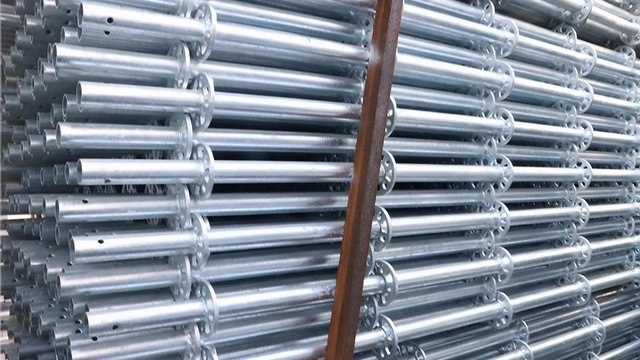
A scaffolding system consists of many steel components, so efficient packing can significantly affect shipping costs.
For international buyers, it is important to consider:
- Component dimensions
- Component weight
- Container loading
- Packing efficiency
- Storage space
- Handling requirements
Ringlock and Cuplock can both be efficiently stacked and transported when properly packed.
For overseas projects, manufacturers should optimize component dimensions and container loading according to the customer's project requirements.
Ringlock vs Cuplock: Which Is Better for Large Projects?
For large construction and infrastructure projects, flexibility and installation efficiency become increasingly important.
Ringlock is often preferred for projects such as:
- High-rise buildings
- Large commercial developments
- Bridges
- Stadiums
- Industrial facilities
- Power plants
- Oil and gas projects
- Large infrastructure projects
The main reason is its combination of modularity, flexibility, fast assembly, and wide application range.
Cuplock can also perform well on large projects, particularly where the scaffolding layout is relatively regular and repetitive.
Therefore, the best system depends on the structure, project schedule, local practices, and engineering requirements.
Ringlock vs Cuplock: Which One Should You Choose?
There is no single scaffolding system that is perfect for every project.
However, the following guidelines can help.
Choose Ringlock If:
- You need fast installation
- Your project has complex geometry
- You need flexible connection configurations
- You are working on large construction projects
- You need a versatile scaffolding system
- You expect frequent assembly and dismantling
- You want to use the same system for different types of projects
- You need a modular system suitable for both access and structural applications
Choose Cuplock If:
- Your project has a simple and repetitive layout
- Your local contractors are already experienced with Cuplock
- You already have a large Cuplock inventory
- Your project does not require extensive connection flexibility
- You need a proven conventional modular scaffolding system
Ringlock vs Cuplock: Final Verdict
So, which is better, Ringlock or Cuplock?
The answer depends on the requirements of your project.
Cuplock remains a proven and reliable scaffolding system with a simple connection design and broad applications.
However, for many modern construction projects, Ringlock scaffolding offers greater flexibility, fast assembly, and excellent adaptability to complex structures.
If your project requires a versatile scaffolding system that can be used across different applications, especially for large, complex, or demanding projects, Ringlock is generally the better choice.
The most important factor is not simply choosing the system with the lowest purchase price. Instead, contractors should consider the complete lifecycle cost, installation efficiency, structural requirements, durability, transportation, and long-term reusability.
Why Choose LuckyScaffolding Ringlock Scaffolding?
At LuckyScaffolding, we focus on the manufacturing of Ringlock scaffolding systems and components for construction companies, contractors, scaffolding rental companies, and international distributors.
Our Ringlock scaffolding solutions can include:
- Ringlock Standards
- Ringlock Ledgers
- Diagonal Braces
- Base Collars
- Adjustable Screw Jacks
- Steel Platforms
- Guardrails
- Ladders
- Ringlock Accessories
We understand that different projects have different requirements. Therefore, we can provide Ringlock scaffolding components according to project specifications, including component dimensions, surface treatment, quantities, and packaging requirements.
For international customers, proper manufacturing quality, consistent dimensions, reliable welding, corrosion protection, and efficient container loading are all important considerations.
If you are looking for a reliable Ringlock scaffolding manufacturer and supplier, contact LuckyScaffolding to discuss your project requirements.
Frequently Asked Questions
Is Ringlock better than Cuplock scaffolding?
For many modern and complex construction projects, Ringlock offers greater flexibility and adaptability. However, Cuplock can still be an excellent choice for conventional and repetitive applications.
What is the main difference between Ringlock and Cuplock?
The main difference is their connection system. Ringlock uses a rosette and wedge-pin connection, while Cuplock uses a cup-and-blade connection.
Which is faster to install, Ringlock or Cuplock?
Both systems can be installed quickly by trained workers. Ringlock may provide an advantage on projects that require flexible configurations or frequent changes to the scaffolding layout.
Which scaffolding system is stronger?
Both Ringlock and Cuplock can provide strong and stable structures when properly designed and installed. Actual load capacity depends on component specifications, spacing, bracing, foundation conditions, loads, and engineering design.
Is Ringlock scaffolding more expensive than Cuplock?
The initial price depends on material specifications, manufacturing quality, surface treatment, order quantity, and market conditions. Buyers should also consider labor, transportation, maintenance, and long-term reuse costs.
Can Ringlock replace Cuplock scaffolding?
In many applications, Ringlock can be used instead of Cuplock. However, the appropriate system depends on the project design, local regulations, contractor experience, and existing equipment inventory.
Which scaffolding is better for high-rise buildings?
Ringlock is often a strong choice for high-rise construction because of its modular design, flexibility, and efficient assembly. The final scaffolding configuration should always be designed according to the project requirements and applicable regulations.
Which scaffolding system is better for industrial projects?
Ringlock is particularly suitable for industrial projects where scaffolding may need to adapt to complex structures, equipment, pipes, platforms, and changing work areas.
Conclusion
Ringlock and Cuplock are both proven modular scaffolding systems with their own advantages.
Cuplock is a practical solution for conventional and repetitive scaffolding applications, while Ringlock provides greater flexibility and adaptability for a wider range of modern construction projects.
For contractors looking for fast assembly, flexible configurations, broad applications, and long-term reusability, Ringlock is an excellent option.
With the right design, quality components, professional installation, and proper maintenance, Ringlock scaffolding can provide an efficient and reliable solution for demanding construction projects.