When sourcing Ringlock scaffolding from China, one of the first questions buyers ask is: How much does Ringlock scaffolding cost per ton?
The answer depends on more than the price of steel. Tube diameter, wall thickness, steel grade, hot-dip galvanizing, component selection, order quantity, manufacturing quality, and trade terms all influence the final quotation.
Two suppliers may offer Ringlock scaffolding at very different prices per ton, even when their products look similar in photographs. The difference may come from material specifications, component weights, surface treatment, quality control, or the scope of supply.
Understanding these factors helps importers, scaffolding rental companies, distributors, and construction contractors compare quotations accurately and avoid unexpected costs.
In this guide, LuckyScaffolding, a Ringlock scaffolding supplier based in Nanjing, explains the major factors affecting Ringlock scaffolding prices, how to calculate the cost per ton, and how to make a more informed purchasing decision.
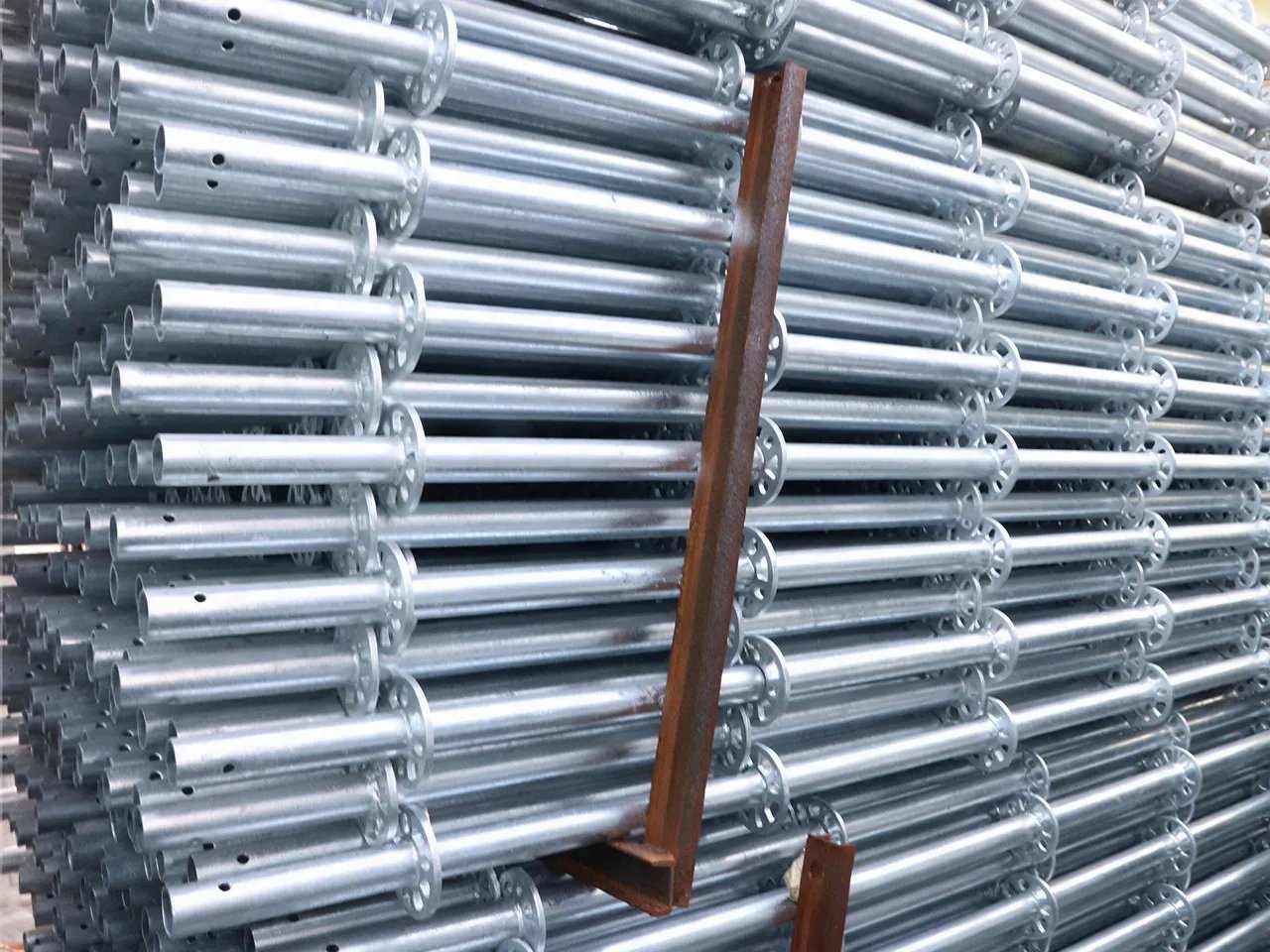
1. What Is the Price of Ringlock Scaffolding per Ton?
There is no single price that applies to every Ringlock scaffolding order. The actual cost depends on the specifications, quantity, configuration, and trade terms agreed upon with the manufacturer.
For an accurate quotation, buyers should first define the products they need and the technical requirements each component must meet.
Common Ringlock Scaffolding Pricing Methods
Manufacturers and suppliers commonly quote Ringlock scaffolding in three ways.
Price per ton
Pricing per ton is widely used for bulk purchases, particularly when buyers order large quantities of steel scaffolding components. It provides a convenient starting point for comparing suppliers, provided the product specifications and component mix are comparable.
Price per piece
Pricing per piece is useful when purchasing specific components, such as 2-meter standards, 2.44-meter ledgers, diagonal braces, or adjustable base jacks. It also makes it easier to calculate the budget for a detailed bill of materials.
Price per set
A complete system quotation may include standards, ledgers, diagonal braces, steel planks, base jacks, top jacks, and other accessories. However, the term "set" is not standardized across suppliers. Always confirm exactly what is included.
FOB vs. EXW: Understanding the Quotation Terms
The quoted price also depends on the agreed trade terms, which are defined by the Incoterms® 2020 rules published by the International Chamber of Commerce. LuckyScaffolding quotes on two terms:
- EXW (Ex Works): The goods are made available at the factory. The buyer is responsible for loading, export clearance, inland transport, ocean freight, and all later costs.
- FOB (Free on Board), named Chinese port: The seller delivers the goods on board the vessel nominated by the buyer at the named port of shipment and completes export clearance. Ocean freight, insurance, and destination charges are arranged and paid by the buyer, usually through their own freight forwarder.
When comparing quotations, make sure both suppliers use the same trade term and the same named place or port.
Rather than relying on an unqualified market price, request a quotation based on your required specifications, estimated tonnage, and preferred trade term.
2. What Factors Drive Ringlock Scaffolding Cost per Ton?
Several major factors determine the price of a Ringlock scaffolding system. Understanding each one helps buyers identify whether a quotation represents genuine value.
2.1 Steel Grade: Q235B vs. Q355B
Steel is one of the most important raw materials in Ringlock scaffolding production. The steel grade affects material cost and the mechanical properties of the finished component.
Q235B and Q355B are common Chinese structural steel grades. S235JR and S355JR are European grades that may be specified for relevant applications, subject to the applicable material requirements.
In general, Q355B has a higher specified minimum yield strength than Q235B. However, this does not mean every component made from Q355B automatically has a higher load capacity than every Q235B component. Tube dimensions, connection design, welding, overall scaffold geometry, and loading conditions also matter.
For example, LuckyScaffolding lists Q355B/S355JR steel tube options for Ringlock standards and Q235B/S235JR options for ledgers. Actual material selection should follow the agreed product specification and engineering requirements.
When comparing suppliers, ask for:
- The specified steel grade for each component.
- Material certificates or other appropriate traceability documents.
- Confirmation that the delivered materials match the quotation.
- Applicable mechanical-property and inspection requirements.
Purchasing tip: Do not compare two quotations solely by steel grade. Confirm the tube dimensions, component design, and complete system requirements as well.
2.2 Tube Diameter and Wall Thickness
Tube dimensions directly affect steel consumption and component weight, making them important drivers of cost per ton.
A common Ringlock scaffolding tube outside diameter is 48.3 mm, but wall thickness can vary according to the component and the required specification.
For example, a buyer may request standards with a 48.3 mm outside diameter and a 3.2 mm wall thickness. Another order may require a thicker tube for a particular design or project specification.
A thicker tube generally uses more steel per meter, increasing the weight of an individual component. It also changes the number of components that a given tonnage represents.
However, thicker does not automatically mean suitable for every application. Specifications must be selected according to engineering requirements and applicable standards.
When comparing quotations, check the following:
- Tube outside diameter.
- Nominal wall thickness and applicable tolerances.
- Component length.
- Steel grade.
- Actual component weight.
- Relevant inspection and acceptance criteria.
A low quotation may reflect thinner tubes, lighter components, or a different product configuration. These differences should be identified before making a purchasing decision.
2.3 Hot-Dip Galvanizing and Surface Treatment
Surface treatment is another significant cost factor, especially for scaffolding intended for repeated use in outdoor or industrial environments.
Common options include painted steel, electro-galvanized components, and hot-dip galvanized components.
Hot-dip galvanizing generally requires additional processing, including surface preparation, immersion in molten zinc, and subsequent inspection. The cost depends on the component design, surface area, steel condition, zinc consumption, and quality requirements.
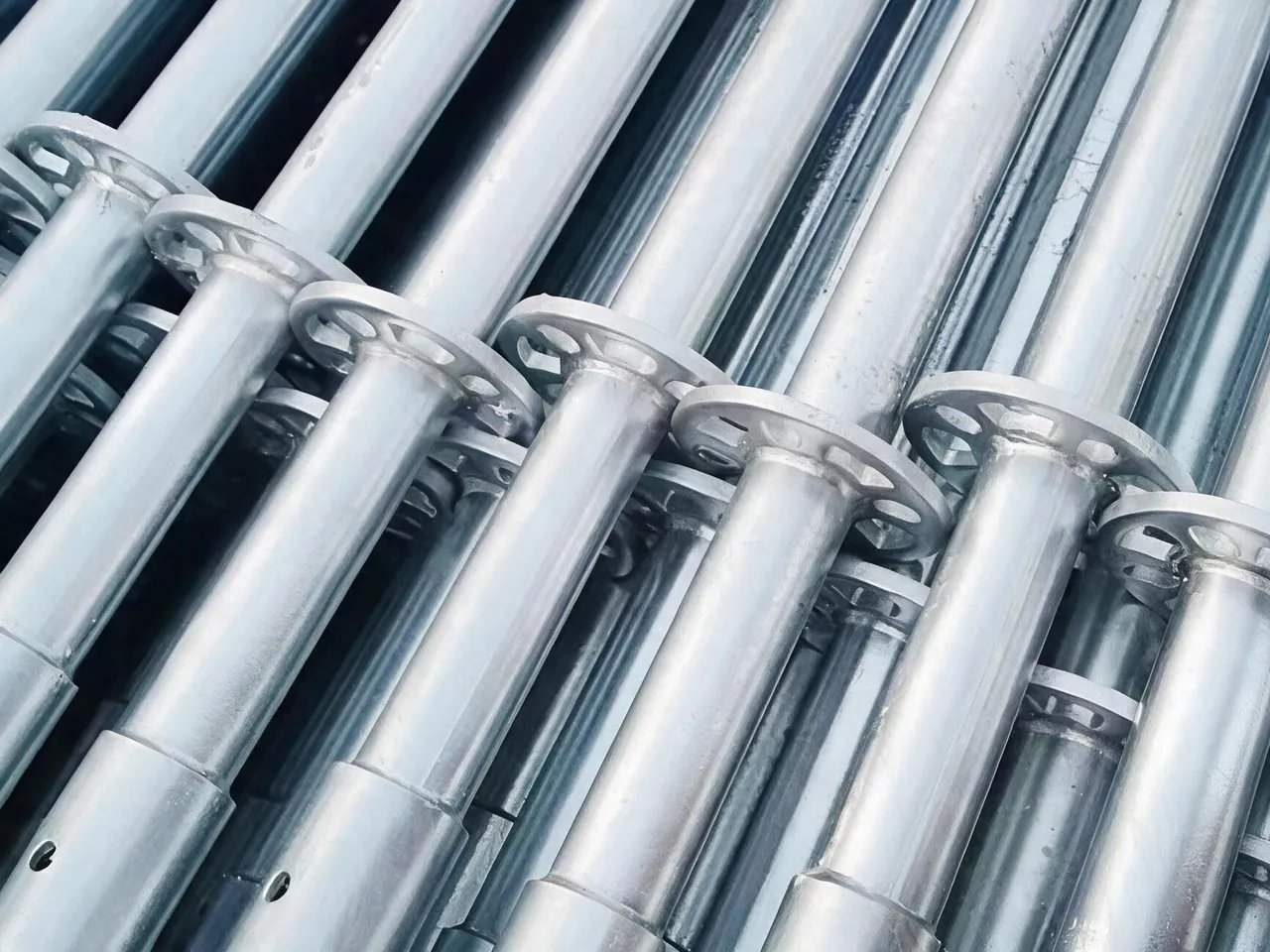
Its main advantage is corrosion protection. Properly specified and maintained galvanized scaffolding can support repeated use across multiple projects, although its service life depends on the operating environment, coating quality, handling, and maintenance.
When comparing galvanized Ringlock scaffolding, confirm:
- Whether galvanizing is applied before or after fabrication.
- Whether internal and external surfaces are treated as specified.
- The required coating thickness or coating mass, for example according to ISO 1461 for hot-dip galvanized fabricated steel articles.
- The applicable inspection method and acceptance criteria.
- Whether coating inspection records are available.
Do not assume that all products described as "hot-dip galvanized" have identical coating quality.
For buyers planning long-term rental operations, the initial purchase price should be considered alongside maintenance, repair, replacement, and expected reuse.
2.4 Component Types and System Configuration
A complete Ringlock scaffolding system consists of multiple components, and each has a different weight, manufacturing process, and cost structure.
The main components include:
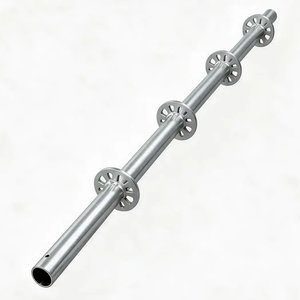
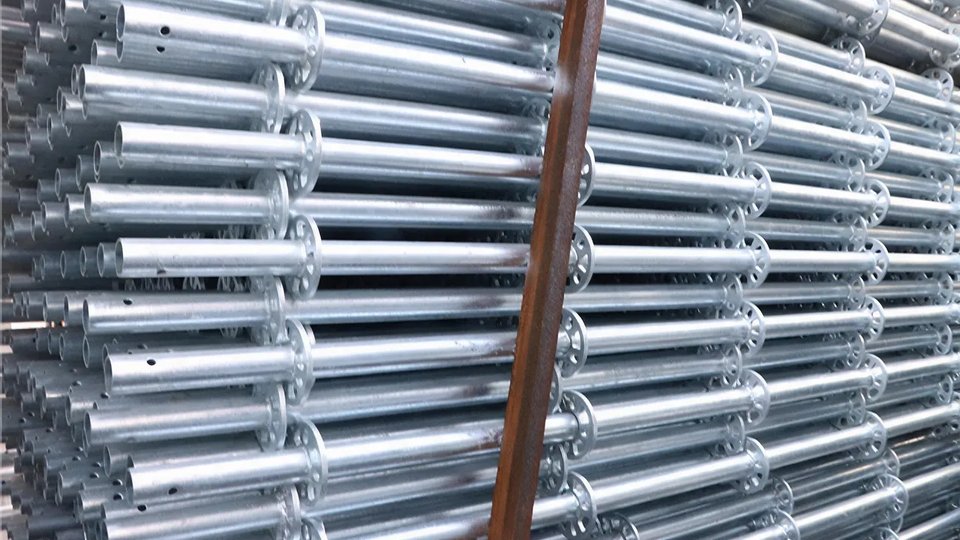
- Standards: Vertical members fitted with rosettes.
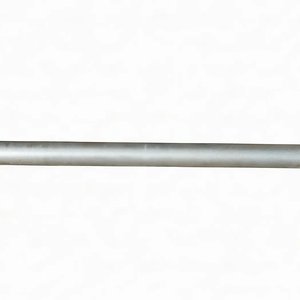
- Ledgers: Horizontal members connecting standards.
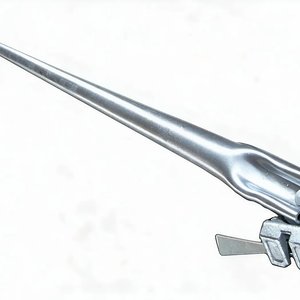
- Diagonal braces: Components that provide bracing within the designed scaffold arrangement.
- Steel planks: Working platforms fitted to the scaffold system.
- Base jacks and top jacks: Adjustable components used for leveling and supporting the system as designed.
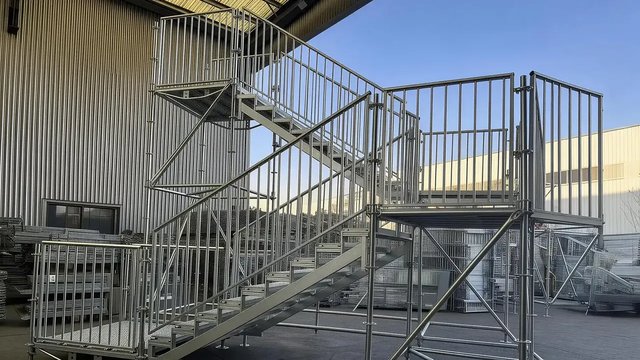
- Accessories: Items such as connecting pins, spigots, stair units, guardrails, and toe boards.
A quotation dominated by standards and ledgers may have a different average price per ton from one containing a larger proportion of steel planks, stair units, or specialized accessories.
This is because the components differ in steel consumption, fabrication complexity, connection details, and finishing requirements.
For this reason, buyers should provide a complete bill of materials (BOM) whenever possible.
If a full BOM is not available, provide the project dimensions, intended application, platform requirements, and other relevant design information. The supplier can then help prepare a proposed material list for review.
2.5 Manufacturing Processes and Welding Quality
Manufacturing efficiency affects production cost, but quality control is equally important.
The production process may include tube cutting, punching, forming, rosette fabrication, welding, assembly, galvanizing, and final inspection.
Production equipment, labor costs, factory utilization, and process consistency all influence the manufacturer's cost structure.
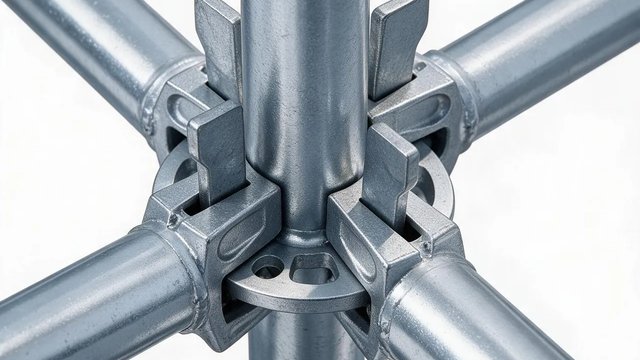
Welding quality deserves particular attention because the rosette connections transfer forces between scaffold members. Poorly controlled welds, inaccurate dimensions, or inconsistent connection components can affect assembly and system performance.
When assessing a manufacturer, consider:
- Production equipment and process control.
- Welding procedures and inspection arrangements.
- Dimensional accuracy and component compatibility.
- Traceability of raw materials and finished products.
- Procedures for identifying and handling defective products.
A lower manufacturing price is not necessarily an advantage if it comes with inconsistent quality, excessive rejection rates, or problems during installation.
2.6 Standards, Testing, and Quality Documentation
The standards and testing requirements specified by the buyer can also affect the quotation.
Depending on the product and intended application, relevant references may include EN 12810 and EN 12811 for facade scaffolds and performance requirements, along with other applicable standards for scaffold components, materials, or temporary works.
Requirements vary by market and project. Buyers should confirm which standards apply to the actual system being purchased rather than assuming one certificate covers every product and configuration.
Additional testing, third-party inspection, special documentation, or project-specific verification may increase the overall cost.
Before placing an order, clarify:
- Which standards and technical requirements apply.
- Whether testing relates to individual components or a complete system.
- Which certificates and inspection records will be supplied.
- Whether independent inspection is required.
- Who will bear the cost of additional testing.
Quality documents should be checked for their scope, validity, and relevance to the products being purchased.
2.7 Order Quantity and Production Scale
Order quantity affects both production planning and logistics.
Small orders may involve proportionally higher costs for setup, material procurement, packaging, and shipping. Larger orders can offer economies of scale, particularly when standard components can be manufactured in efficient production batches.
However, a larger order does not guarantee a lower price per ton in every case. The result depends on the product mix, raw material prices, production schedule, customization, and payment terms.
Buyers should consider:
- Total required tonnage.
- The number of component types and sizes.
- Whether the order uses standard or customized specifications.
- Container utilization.
- Inventory capacity and project delivery schedules.
For scaffolding rental companies and distributors, repeat orders using consistent specifications may also simplify procurement and inventory management.
The objective is to find an economical order quantity without purchasing unnecessary stock or tying up excessive working capital.
2.8 Packaging, Container Loading, and International Shipping
For international buyers, the factory price is only one part of the total purchasing cost.
Packaging, inland transport to the port, export handling, ocean freight, insurance, and destination charges may all affect the final landed cost. Under FOB or EXW terms, ocean freight and insurance are booked by the buyer's freight forwarder, so they are quoted separately from the scaffolding.
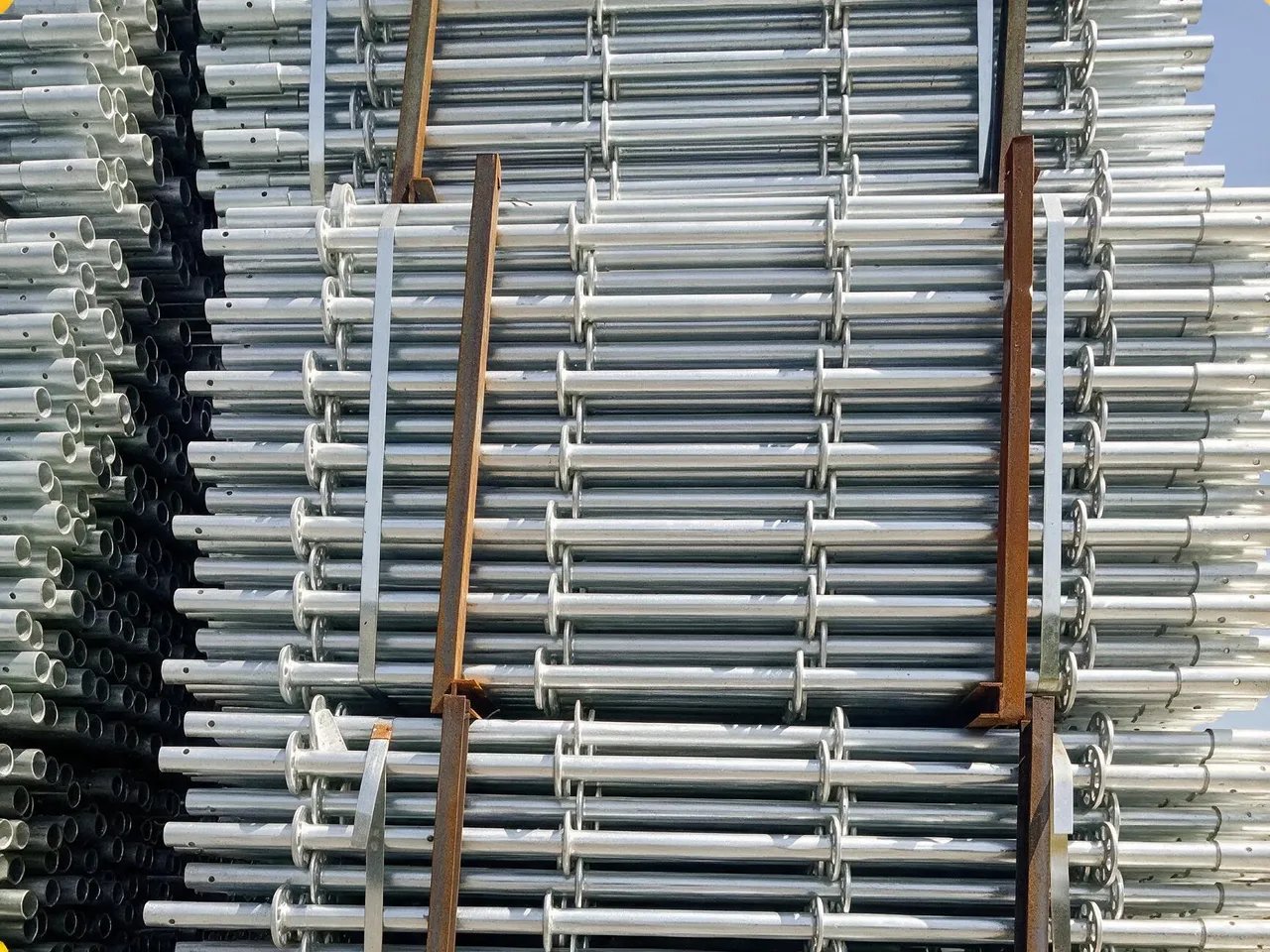
Ringlock scaffolding consists of components with different lengths and shapes. Efficient bundling and loading can improve container utilization, but the final loading plan depends on component dimensions, packaging, weight limits, and cargo-handling requirements.
Before asking your forwarder for a freight quotation, confirm with the supplier:
- The total net weight and gross shipping weight.
- The estimated packaging dimensions and loading volume.
- The proposed container type and loading plan.
- The port of loading in China.
Your forwarder can then quote ocean freight, insurance, and destination charges to your port.
A supplier offering a lower FOB price may not provide the lowest total cost once packaging quality, container utilization, and import expenses are taken into account.
3. How Is Ringlock Scaffolding Cost per Ton Calculated?
Once the product specifications and quotation are clear, calculating the average price per ton is straightforward.
3.1 The Basic Cost-per-Ton Formula
The basic formula is:
Price per ton = Total product cost ÷ Total net product weight in tons
For example, if a batch of Ringlock scaffolding has a total product cost of $50,000 and a net product weight of 20 metric tons:
Price per ton = $50,000 ÷ 20 = $2,500 per ton.
This is a hypothetical calculation, not a current market price or a LuckyScaffolding quotation.
Make sure the numerator and denominator refer to the same shipment and scope of supply. If the total cost includes accessories, those accessories should also be included in the corresponding net product weight when calculating the average price per ton.
For a more detailed comparison, calculate the product cost separately from freight, insurance, and other charges.
3.2 A Worked Example of Ringlock Scaffolding Pricing
Consider a hypothetical purchase with the following conditions:
Item | Example specification |
|---|---|
Order quantity | 20 metric tons |
Product type | Ringlock scaffolding components |
Steel specifications | Agreed grades, diameters, and wall thicknesses |
Surface treatment | Hot-dip galvanized |
Trade term | FOB Chinese port |
Total product quotation | $50,000 |
Average product price | $2,500/ton |
The average price is calculated by dividing the total product quotation by the net product weight.
If the buyer's freight forwarder then charges $4,000 for ocean freight and $500 for insurance, the combined amount becomes $54,500, before any destination charges, import duties, or taxes.
The resulting combined cost is $2,725 per ton, based on the same 20-ton net product weight.
This illustrates why the quoted factory price and the final landed cost should be evaluated separately.
Actual costs will depend on the destination, trade terms, product specifications, and the charges included in each quotation.
3.3 How to Compare Two Suppliers' Quotations
When comparing quotations from different manufacturers, use a consistent checklist.
Comparison item | What to verify |
|---|---|
Steel grade | Required grade for each component |
Tube dimensions | Outside diameter and wall thickness |
Component lengths | Matching sizes and tolerances |
Component list | Complete and comparable BOM |
Net weight | Consistent calculation basis |
Galvanizing | Coating requirements and inspection |
Quality documents | Relevant certificates and test reports |
Packaging | Protection, bundling, and loading plan |
Trade terms | Same Incoterms and named place or port |
Delivery schedule | Production lead time and shipping plan |
Total quotation | Same product scope and cost basis |
The lowest quoted price per ton should not automatically determine the purchasing decision.
First confirm that the two offers cover equivalent products. Then compare the total cost, quality requirements, delivery terms, and supplier reliability.
4. Price per Ton vs. Price per Piece vs. Total Project Cost
Each pricing method serves a different purpose.
Price per Ton
Useful for comparing large orders and estimating the budget for bulk purchases. It works best when product specifications and the component mix are clearly defined.
Price per Piece
Useful for checking individual components against a bill of materials. It also helps buyers estimate replacement costs and manage spare parts.
However, two components with different lengths or specifications should not be compared simply because both are described as Ringlock standards or ledgers. The same applies across systems: a Cuplock price per ton cannot be compared directly with a Ringlock price per ton, because the components and connection details are different (see Ringlock vs Cuplock scaffolding).
Total Project Cost
For a construction project, the complete budget may include scaffolding components, working platforms, access equipment, accessories, transportation, taxes, and other applicable expenses.
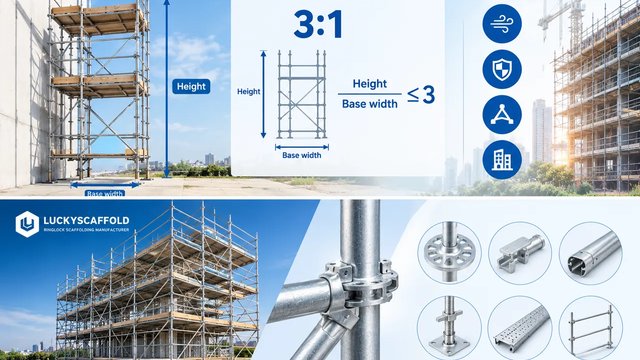
The required configuration should be based on the project's engineering and safety requirements, including the ties and bracing needed for tall or narrow scaffolds (see the 3 to 1 rule for scaffolding).
For rental businesses, the evaluation may also include expected reuse, inspection, maintenance, storage, and replacement costs.
The lowest price per ton does not necessarily mean the lowest total cost of ownership. A suitable system with consistent quality and good service life may offer better long-term value than a cheaper product that requires more maintenance or earlier replacement.
5. How to Reduce Ringlock Scaffolding Purchasing Costs
Reducing costs does not have to mean choosing thinner tubes or lowering quality requirements. Better specification planning and procurement can often produce more meaningful savings.
5.1 Choose the Right Specifications
Start with the project requirements and applicable engineering standards.
Confirm the necessary steel grades, tube dimensions, component lengths, platform requirements, and connection details before requesting quotations.
Avoid unnecessary customization, but never reduce specifications below the requirements of the intended application.
5.2 Optimize the Bill of Materials
Prepare a detailed list of standards, ledgers, braces, planks, jacks, and accessories.
A complete BOM helps the manufacturer calculate quantities and weights more accurately. It also reduces the risk of missing components, emergency purchases, and additional freight costs.
If you are purchasing for a specific project, drawings and a material take-off can help the supplier prepare a more suitable quotation.
5.3 Order in Economical Quantities
Consolidating compatible requirements into a larger order may reduce setup costs and improve freight efficiency.
Compare the total cost of a trial order with the cost of a larger shipment, while considering storage capacity, project timing, and working capital.
Do not increase the order size solely to obtain a discount if the additional inventory is unlikely to be used.
5.4 Compare Complete Quotations
Ask every supplier to quote against the same specification sheet.
Check material grades, wall thicknesses, lengths, galvanizing requirements, net weights, packaging, quality documents, and trade terms.
A clear quotation makes price differences easier to explain and reduces misunderstandings after the purchase order is issued.
5.5 Work Directly with a Reliable Manufacturer
Working directly with a manufacturer can improve communication about technical requirements, production schedules, quality inspection, and customized orders.
However, buyers should still verify production capability, product quality, documentation, and delivery performance rather than relying on the manufacturer's stated status alone.
For repeat purchases, consistent specifications and clear quality agreements can help simplify future procurement.
6. Why Choose LuckyScaffolding for Ringlock Scaffolding?
LuckyScaffolding is a Ringlock scaffolding manufacturer based in Nanjing, Jiangsu, China, with manufacturing operations dating back to 2005.
The company exports Ringlock scaffolding components and complete systems for construction contractors, distributors, scaffolding rental businesses, and industrial projects.
Complete Ringlock Scaffolding Components
The product range includes:
- Ringlock standards.
- Ringlock ledgers.
- Diagonal braces.
- Steel planks.
- Base jacks and top jacks.
- Rosettes, wedges, and connecting accessories.
- Stairs, toe boards, and other system accessories.
Sourcing multiple compatible components from one manufacturer can simplify quotation preparation, order coordination, and shipment planning.
Material and Specification Options
Different projects have different technical requirements. LuckyScaffolding offers component specifications that can be selected according to the agreed project requirements.
The company's listed products include 48.3 mm outside-diameter standards with 3.2, 3.25, or 4.0 mm wall thickness, different lengths, and hot-dip galvanized finishes.
Buyers should confirm the exact material, dimensions, coating requirements, and product weights for their intended order.
Manufacturing and Quality Control
A reliable purchasing process starts with clear specifications and verifiable quality requirements.
Before ordering, buyers can discuss the required component list, technical documentation, inspection arrangements, packaging, and delivery schedule with the supplier.
For projects requiring specific standards or third-party inspection, the applicable requirements should be agreed upon before production.
Each shipment is supplied with a commercial invoice, packing list, certificate of origin, mill certificates, and galvanizing reports. The bill of lading is issued by the shipping line or the buyer's freight forwarder.
Factory-Direct Quotation and Engineering Support
Providing a detailed material list or project drawings helps the manufacturer prepare a more accurate quotation.
LuckyScaffolding can assist buyers in reviewing their required Ringlock scaffolding components and preparing a quotation based on the specified products and quantities, on FOB (Chinese port) or EXW terms.
7. Frequently Asked Questions About Ringlock Scaffolding Prices
How much does Ringlock scaffolding cost per ton?
The price depends on steel grade, tube dimensions, component configuration, galvanizing, order quantity, and trade terms. The most reliable way to determine the cost is to request a quotation based on a defined bill of materials.
What is the main factor affecting Ringlock scaffolding prices?
Steel consumption and raw material costs are important factors, but they are not the only ones. Manufacturing, welding, surface treatment, component selection, quality control, and logistics can also have a significant impact.
Is Q355B Ringlock scaffolding more expensive than Q235B?
Q355B generally has a higher specified minimum yield strength and may cost more than Q235B, depending on current material prices and purchasing conditions. The actual price difference depends on the product design, steel market, and quotation scope.
The appropriate grade should be selected according to engineering requirements rather than price alone.
How does wall thickness affect the price of Ringlock scaffolding?
For otherwise comparable steel tubes, a thicker wall generally increases steel consumption and component weight. The final price also depends on fabrication, finishing, and the agreed specifications.
Buyers should compare both the nominal dimensions and the actual quoted component weights.
Is hot-dip galvanized Ringlock scaffolding worth the extra cost?
It can be a good investment for applications that require corrosion protection and repeated use. The economic benefit depends on the operating environment, coating quality, maintenance requirements, and expected service life.
Compare the initial cost with the anticipated maintenance and replacement costs over the intended period of use.
Is it cheaper to buy Ringlock scaffolding by the ton or by the piece?
Neither method is automatically cheaper. Pricing per ton is useful for bulk procurement, while pricing per piece provides greater visibility into individual component costs.
The best comparison is based on the same specifications, quantities, and total scope of supply.
How much Ringlock scaffolding can fit in a 40HQ container?
The quantity depends on the dimensions and weight of the components, packaging, loading arrangement, and applicable container payload limits.
Ask the supplier to prepare a loading plan based on your actual component list rather than relying on a generic tonnage estimate.
What information is needed to get an accurate Ringlock scaffolding quotation?
Provide the component list, required quantities, steel grades, tube dimensions, lengths, galvanizing requirements, destination country, and preferred trade term (FOB or EXW).
If the project requires a complete system, drawings or project dimensions can also help the manufacturer review the material requirements.
8. Get a Ringlock Scaffolding Quotation from LuckyScaffolding
The best way to obtain an accurate Ringlock scaffolding price per ton is to define your requirements before comparing suppliers.
Whether you need a full Ringlock scaffolding system for a construction project or bulk components for distribution and rental, a detailed quotation can help you evaluate product quality, total cost, and delivery arrangements.
When contacting LuckyScaffolding, please provide:
- Product requirements: Standards, ledgers, braces, planks, jacks, and accessories.
- Technical specifications: Steel grade, tube diameter, wall thickness, and component lengths.
- Surface treatment: Hot-dip galvanizing and any specific coating requirements.
- Order quantity: Estimated tonnage or a detailed bill of materials.
- Destination and trade term: Destination country and preferred term (FOB Chinese port or EXW).
- Project documents: Drawings or material lists, if available.
With this information, the manufacturer can prepare a quotation that better matches your purchasing requirements.