Scaffolding is a temporary structure that provides safe access and working platforms for construction, maintenance, renovation and industrial projects. Although scaffolding systems may look similar from a distance, they consist of several different components, each designed to perform a specific structural or safety function.
The main parts of scaffolding are standards, ledgers, diagonal braces, platforms, base jacks, guardrails, toe boards and access components. In a Ringlock scaffolding system, rosettes and purpose-designed wedge-head connectors also play a central role, joining the individual members into one complete structure.
Understanding these components helps contractors select the right scaffolding system, prepare accurate material lists, compare manufacturers and avoid compatibility problems during installation.
This guide explains the main parts of scaffolding, how they work together, and what buyers should check when purchasing scaffolding components. Where we quote typical Ringlock dimensions, they are the specifications LuckyScaffolding manufactures to; other systems and suppliers may differ.
1. What Are the Main Parts of Scaffolding?
A scaffolding system is made up of structural members, connection components, working platforms, foundation supports and safety accessories. The exact configuration depends on the scaffolding type, the intended application, the engineering design and the applicable safety requirements.
The following table introduces the main components commonly found in scaffolding systems.
Scaffolding part | Main function |
|---|---|
Standards (vertical posts) | Form the main vertical structure and transfer loads down to the foundation |
Ledgers | Connect standards horizontally and form the scaffold framework |
Transoms | Run across the scaffold width and support platforms, depending on the system |
Diagonal braces | Provide lateral stability and resist racking |
Rosettes | Provide connection points for Ringlock ledgers and braces |
Steel planks / platforms | Provide working surfaces for workers and permitted materials |
Base jacks | Adjust the scaffold to the level of the supporting ground |
Base plates | Provide a bearing surface at the foot of each standard |
U-heads / top jacks | Provide adjustable upper support, mainly in shoring systems |
Guardrails | Protect workers from falls at exposed platform edges |
Toe boards | Stop tools and materials from falling off platform edges |
Access ladders / stair units | Provide designated access between working levels |
Scaffold ties | Connect the scaffold to the building or another designed support |
Couplers | Connect tubes in tube-and-coupler scaffolding |
Not every scaffolding system uses all of these components in the same way, because the three main types of scaffolding join their members differently. Ringlock scaffolding uses rosette connection nodes with matching ledger and brace heads. Cuplock scaffolding uses a cup-based connection, while frame scaffolding uses prefabricated frames and system-specific connections.
For this reason, scaffolding components should be selected as part of a compatible system rather than treated as interchangeable steel parts.
2. Standards: The Main Vertical Components of Scaffolding
What Are Scaffolding Standards?
Standards, also called vertical posts or uprights, are the primary vertical members of a scaffolding structure.
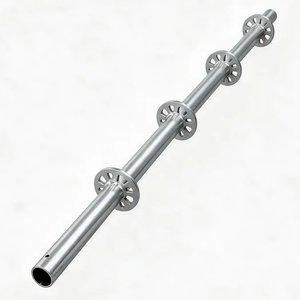
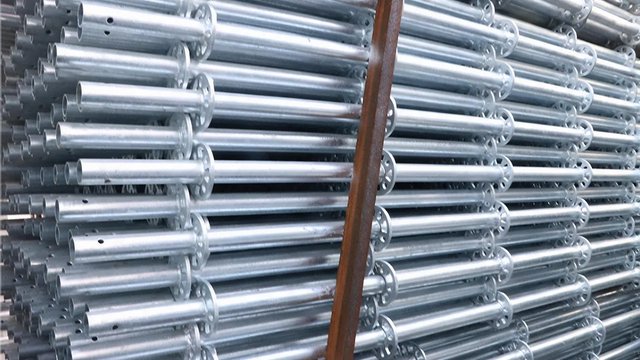
In a Ringlock scaffolding system, a standard is a steel tube with rosettes welded at fixed intervals. The rosettes provide connection points for ledgers, diagonal braces and other system components.
Standards are positioned vertically according to the scaffold's designed layout. They support the framework and transfer loads down to the base jacks and foundation.
What Do Standards Do?
Standards perform several important functions within a scaffolding system.
First, they form the vertical framework that supports the working levels and access areas.
Second, they carry the forces transferred through the connected members. Depending on the design, these may include axial compression, bending and other effects of the scaffold's loading and geometry.
Third, they transfer loads to the base jacks, base plates or other designed supports.
The load capacity of a standard depends on more than the steel grade. Tube dimensions, material properties, member length, connection conditions, effective buckling length, bracing arrangement and overall scaffold stability must all be considered.
Common Specifications of Ringlock Standards
When purchasing Ringlock standards, buyers should check several key specifications.
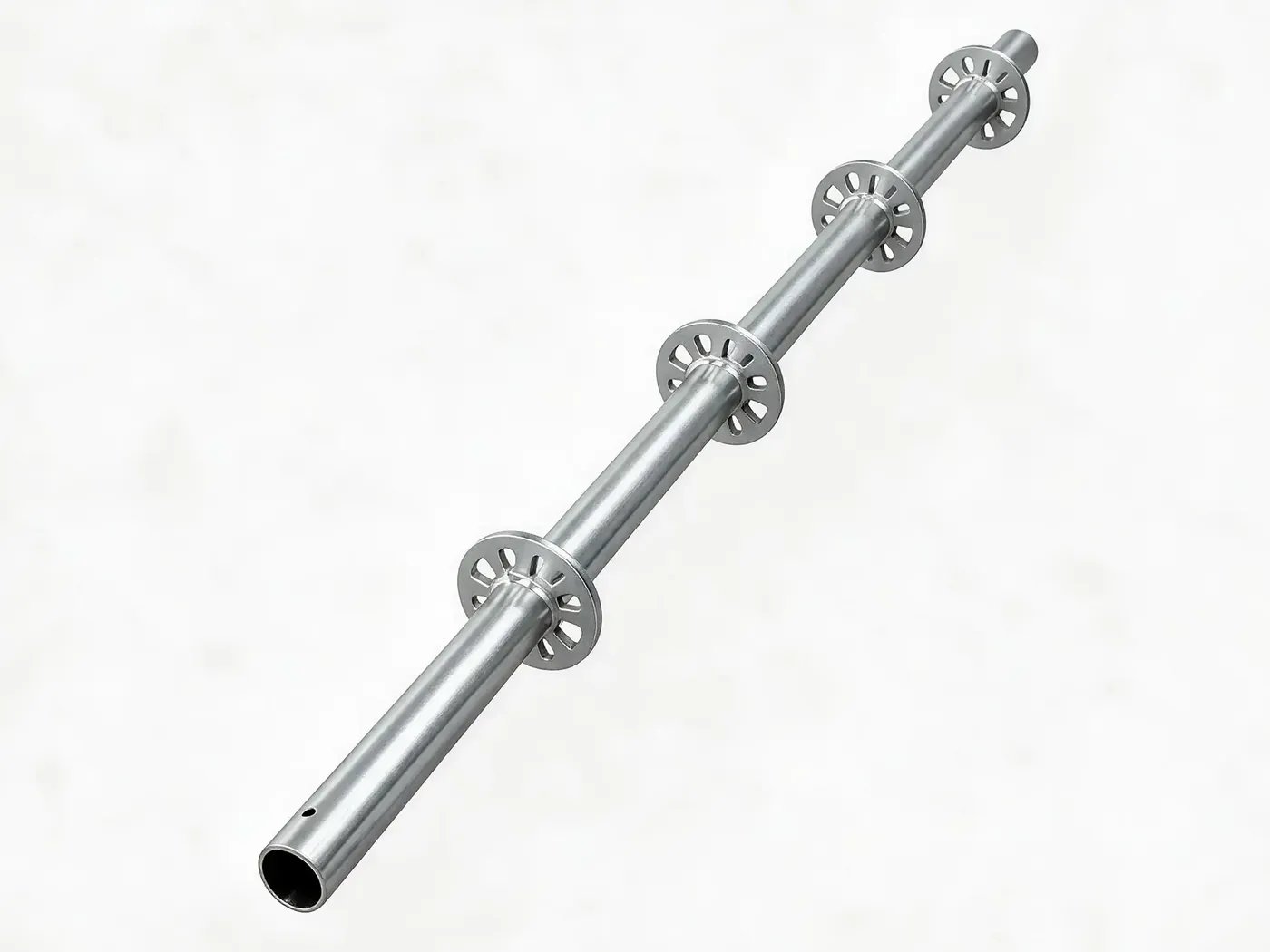
Tube outside diameter and wall thickness
These dimensions influence the component's weight, strength and stiffness. Most Ringlock systems use a 48.3 mm outside diameter; our standards are made in 48.3 × 3.2 mm, 48.3 × 3.25 mm and 48.3 × 4.0 mm. Some heavy-duty shoring systems use 60.3 mm tube, which is not compatible with 48.3 mm components.
Standard length
Standards are supplied in different lengths to suit the designed lift arrangement. Common lengths run from 0.5 m to 3.0 m in 0.5 m steps.
Steel grade
The steel grade determines key material properties such as yield strength. Our standards use Q355B / S355JR steel with a minimum yield strength of 355 MPa. Buyers should check the actual grade against the order specification and the mill certificate.
Rosette spacing
Rosette spacing decides where ledgers and braces can connect. The common spacing is 500 mm, and it must match the rest of the system.
Spigot or joint connection
Standards are joined end to end with a spigot. The joint must be compatible with the system and secured according to the manufacturer's instructions.
Surface treatment
Hot-dip galvanizing to ISO 1461, with an average zinc coating of at least 80 µm, is the usual protection for outdoor use.
What Should Buyers Check When Purchasing Standards?
Before placing an order, confirm the outside diameter, wall thickness, length, steel grade, rosette spacing, connection design and surface treatment.
It is also worth checking tube straightness, dimensional tolerances, weld quality and the availability of quality documents such as mill certificates and galvanizing reports.
Choosing standards on price per piece alone can be misleading. A meaningful comparison requires matching specifications and an understanding of the complete system requirements.
3. Ledgers: Connecting Scaffolding Standards Horizontally
What Are Scaffolding Ledgers?
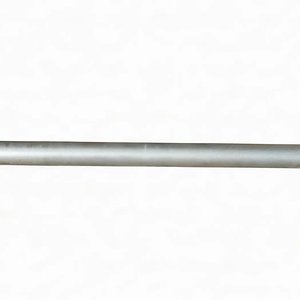
Ledgers are horizontal members that connect standards and form the horizontal framework of a scaffold.
In Ringlock scaffolding, ledgers have drop-forged wedge heads at both ends. The head slides into a rosette slot and is locked by driving in its captive wedge pin, creating the intended framework geometry.
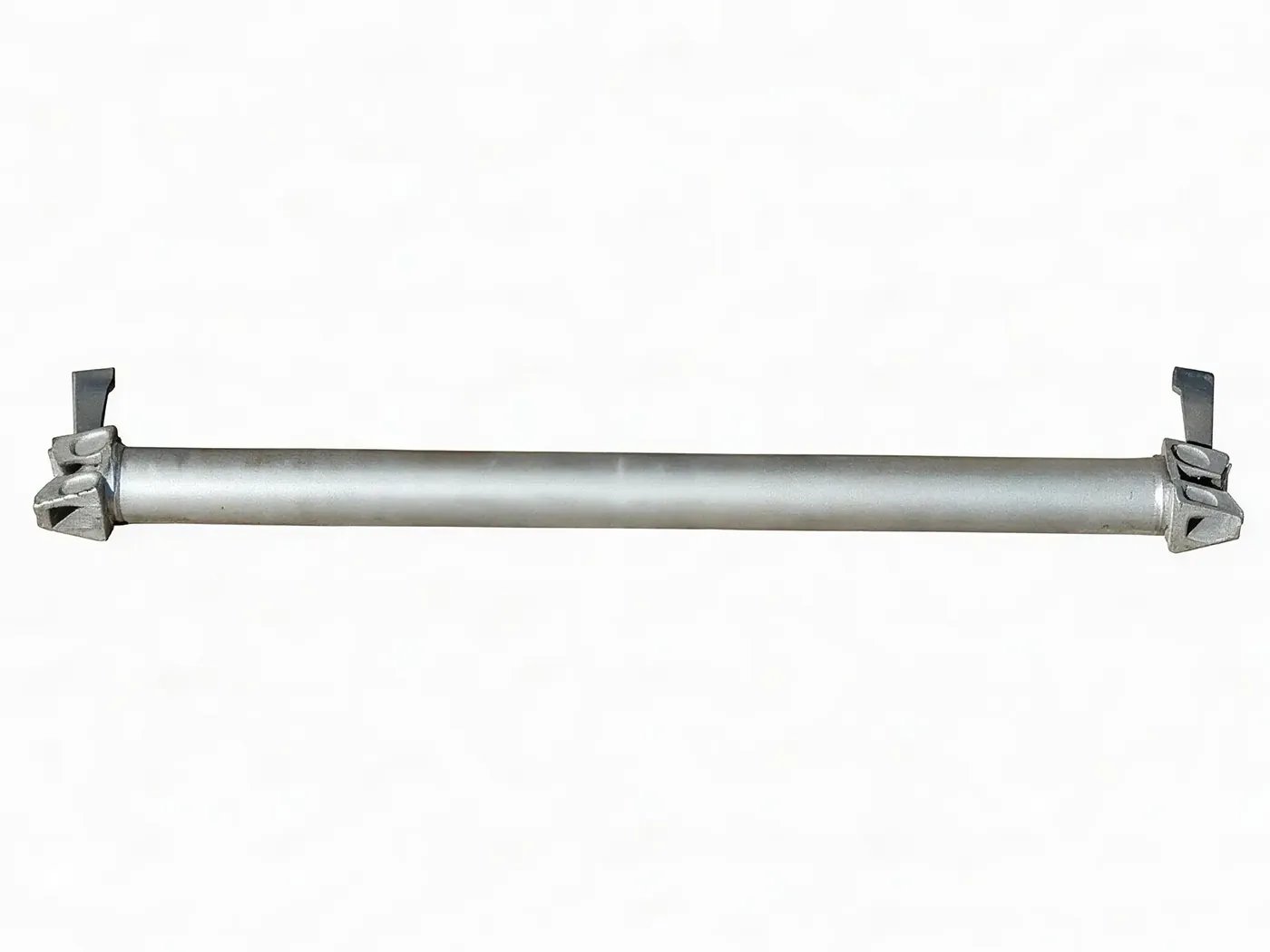
Ledger length is selected according to the designed spacing between standards. Typical Ringlock ledger lengths run from 0.65 m to 3.05 m, with 48.3 mm tube in Q235B / S235JR steel.
What Is the Function of a Ledger?
Ledgers connect adjacent standards and help the scaffold keep its designed shape.
They also transfer forces between connected members and contribute to the overall structural behaviour of the scaffold. Their exact role depends on the system configuration and engineering design.
Ledgers should not be regarded as simple horizontal bars. Their dimensions, end connections, material properties and installation all affect system performance.
Common Ledger Specifications
When selecting ledgers, consider:
- Overall length and intended bay spacing.
- Tube outside diameter and wall thickness.
- Steel grade and component weight.
- Wedge head design and compatibility.
- Weld quality and dimensional accuracy.
- Surface treatment and corrosion protection.
The ledger length must match the scaffold layout. A component of the wrong length can prevent correct assembly or change the intended geometry.
What Is the Difference Between a Ledger and a Transom?
Ledgers and transoms are both horizontal members, but their roles are not necessarily the same.
A ledger generally runs along the length of the scaffold and connects standards in the horizontal framework.
A transom generally runs across the scaffold width. Depending on the system, it may support platforms or connect other structural members.
The terms vary between systems and manufacturers. In Ringlock scaffolding, the same ledger is often used in both directions, while some systems use dedicated transoms to support platform edges or intermediate platform supports.
When preparing a material list, follow the manufacturer's component names and the approved scaffold drawings.
4. Diagonal Braces: Maintaining Scaffolding Stability
What Are Scaffolding Diagonal Braces?
Diagonal braces are structural members installed at an angle between other scaffold members. They resist lateral movement and contribute to the stability of the assembled structure.
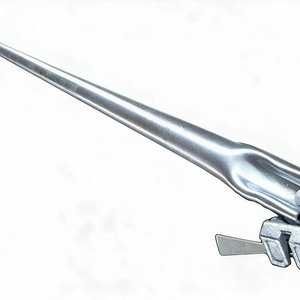
In Ringlock scaffolding, diagonal braces have wedge heads that connect to the small slots of the rosettes. Typical braces use 42.2 × 2.5 mm tube for standard duty or 48.3 × 2.75 mm tube for heavy duty, and their length follows the bay width and lift height.
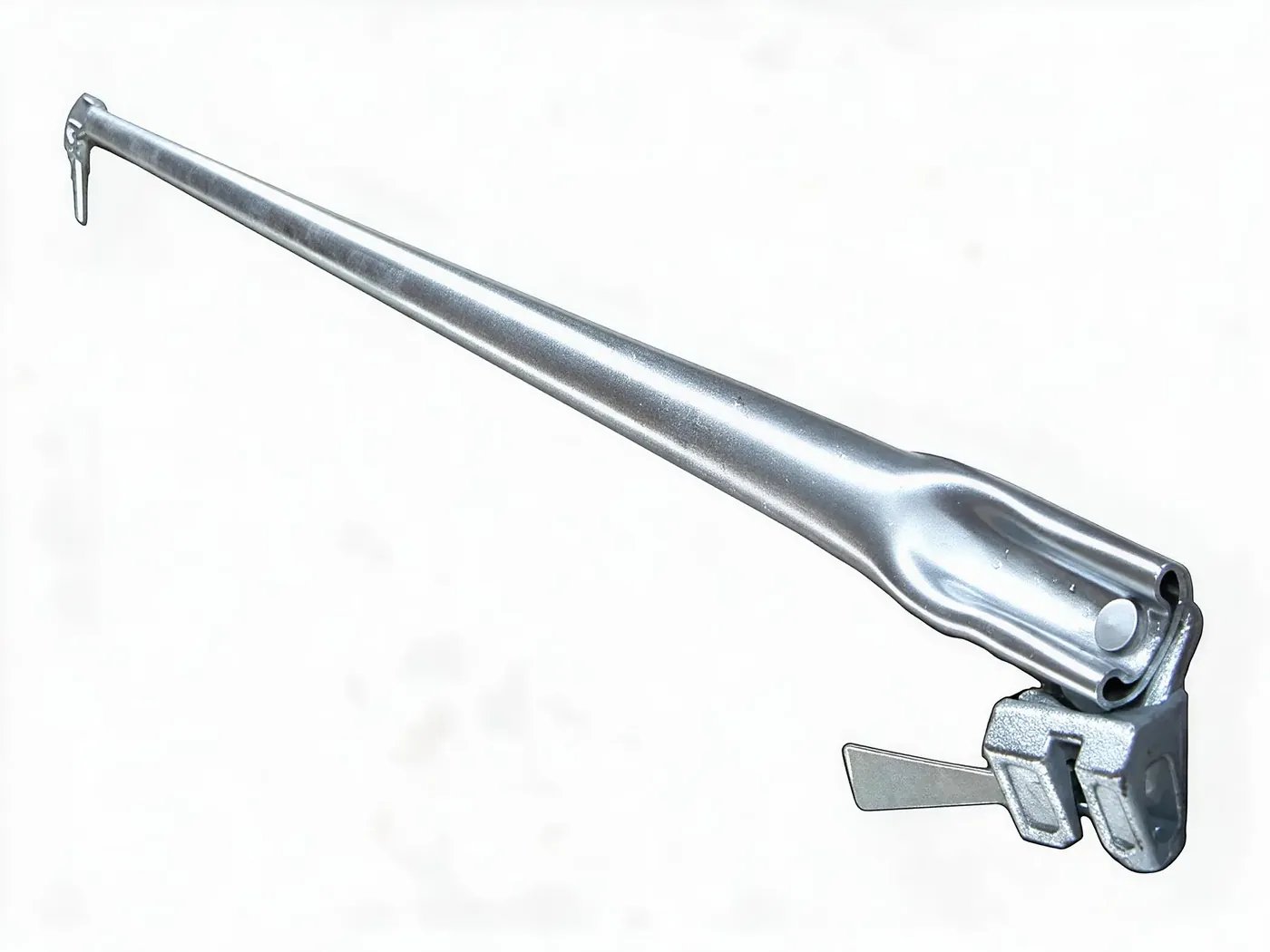
Bracing requirements depend on the scaffold's height, geometry, intended use, loading, tie arrangement and the applicable design rules.
Why Are Diagonal Braces Important?
A scaffold must remain stable under its intended loads. Vertical standards and horizontal ledgers alone may not provide enough resistance to lateral forces or prevent unwanted deformation.
Diagonal braces form triangulated arrangements that make the structure much stiffer against racking.
They work together with the standards, ledgers, scaffold ties and other designed stability measures. The complete arrangement must be considered rather than evaluating each brace in isolation.
Common Types of Scaffolding Bracing
Facade bracing
Facade bracing runs diagonally in the plane of the scaffold face to provide stability along the length of the scaffold.
Plan bracing
Plan bracing is arranged in a horizontal plane to keep the scaffold square and stiff in plan.
Transverse bracing
Transverse bracing runs across the scaffold width, between the inner and outer rows of standards.
These terms describe bracing arrangements; they do not mean that every scaffold needs every type. The required configuration should follow the scaffold design and the manufacturer's instructions.
What Should Buyers Check When Purchasing Diagonal Braces?
Confirm the required length, tube dimensions, wedge head design, compatibility with the standards and the surface treatment.
The braces must fit the intended bay dimensions and connect correctly at the designated nodes.
During installation, workers should inspect the wedge heads and locking pins and confirm that every required brace is installed in the specified position.
Removing or omitting required braces to save material can compromise the designed stability of the scaffold.
5. Rosettes and Connection Components: How Ringlock Scaffolding Fits Together
One of the defining features of Ringlock scaffolding is its rosette connection.
What Is a Rosette?
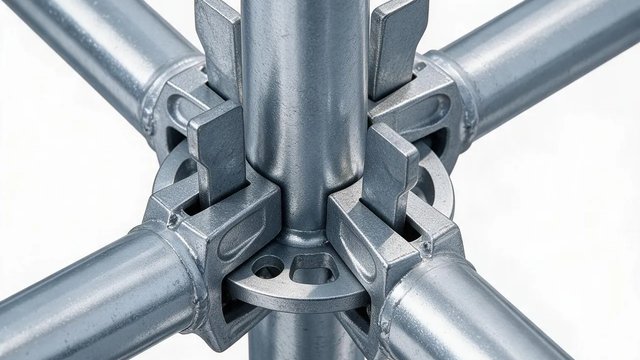
A rosette is a connection plate welded to a Ringlock standard. A typical rosette is about 123 mm in diameter and 8 mm thick, with eight slots: four large slots for ledgers and four small slots for diagonal braces.
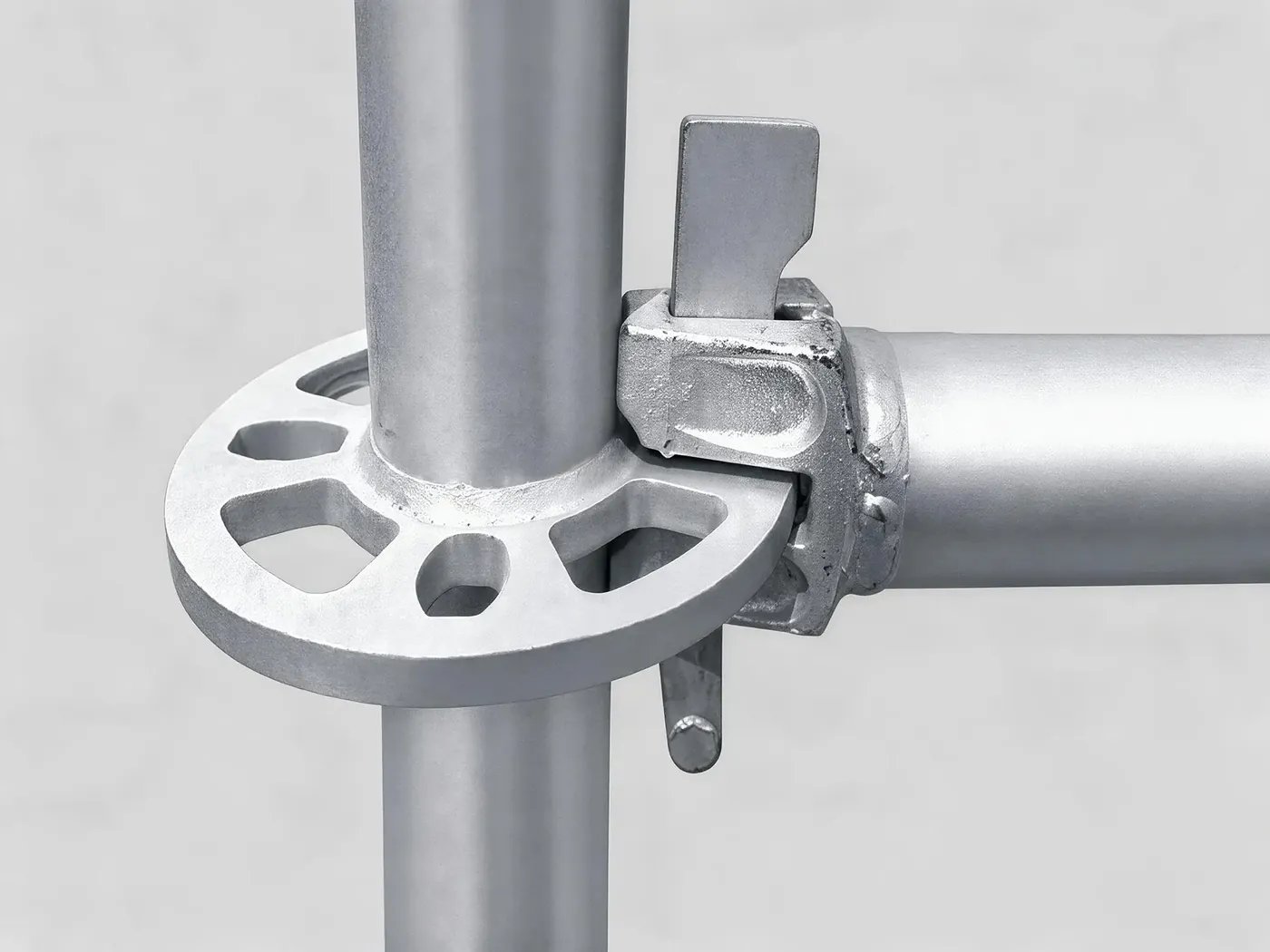
The slots let ledger and brace heads engage with the standard at designated points, so horizontal and diagonal members can be connected at the positions shown on the scaffold layout.
How Does a Ringlock Connection Work?
Although details vary between manufacturers, a typical Ringlock connection follows a simple sequence:
- Position the ledger or brace head at the designated rosette.
- Engage the head with the appropriate rosette slot.
- Drive in the wedge pin with a hammer to lock the connection.
- Check that the head is fully seated and the wedge is tight, as the manufacturer's instructions require.
The connection must be fully engaged and locked before the scaffold is used.
Other Important Ringlock Connection Components
Ledger heads
Ledger heads are the end connectors that attach ledgers to the rosettes.
Brace heads
Brace heads connect the diagonal braces to the rosettes, usually through a hinged joint so the brace can follow the bay geometry.
Spigots or joint pins
Spigots connect standards end to end.
Wedges
Captive wedges lock the ledger and brace heads at the rosette and cannot be lost during assembly.
The exact connection design differs between product ranges. Do not assume that visually similar components from different manufacturers are interchangeable.
Why Does Compatibility Matter?
A complete Ringlock system depends on the correct interaction between standards, rosettes, ledger heads, brace heads and wedges.
Incorrect dimensions, damaged connectors, incompatible parts or improperly locked connections can affect both assembly and structural performance.
When purchasing replacement parts or combining products from different sources, confirm compatibility with the system manufacturer and the relevant engineering requirements.
6. Platforms and Steel Planks: Providing a Working Surface
What Are Scaffolding Platforms?
Scaffolding platforms provide working surfaces for workers and, within the permitted limits, their tools and materials.
Platforms may consist of steel planks, aluminium decks, timber boards or purpose-designed system decks.
A platform must suit the intended use and be supported, secured and inspected in line with the applicable requirements.
Common Types of Scaffolding Platforms
Steel planks
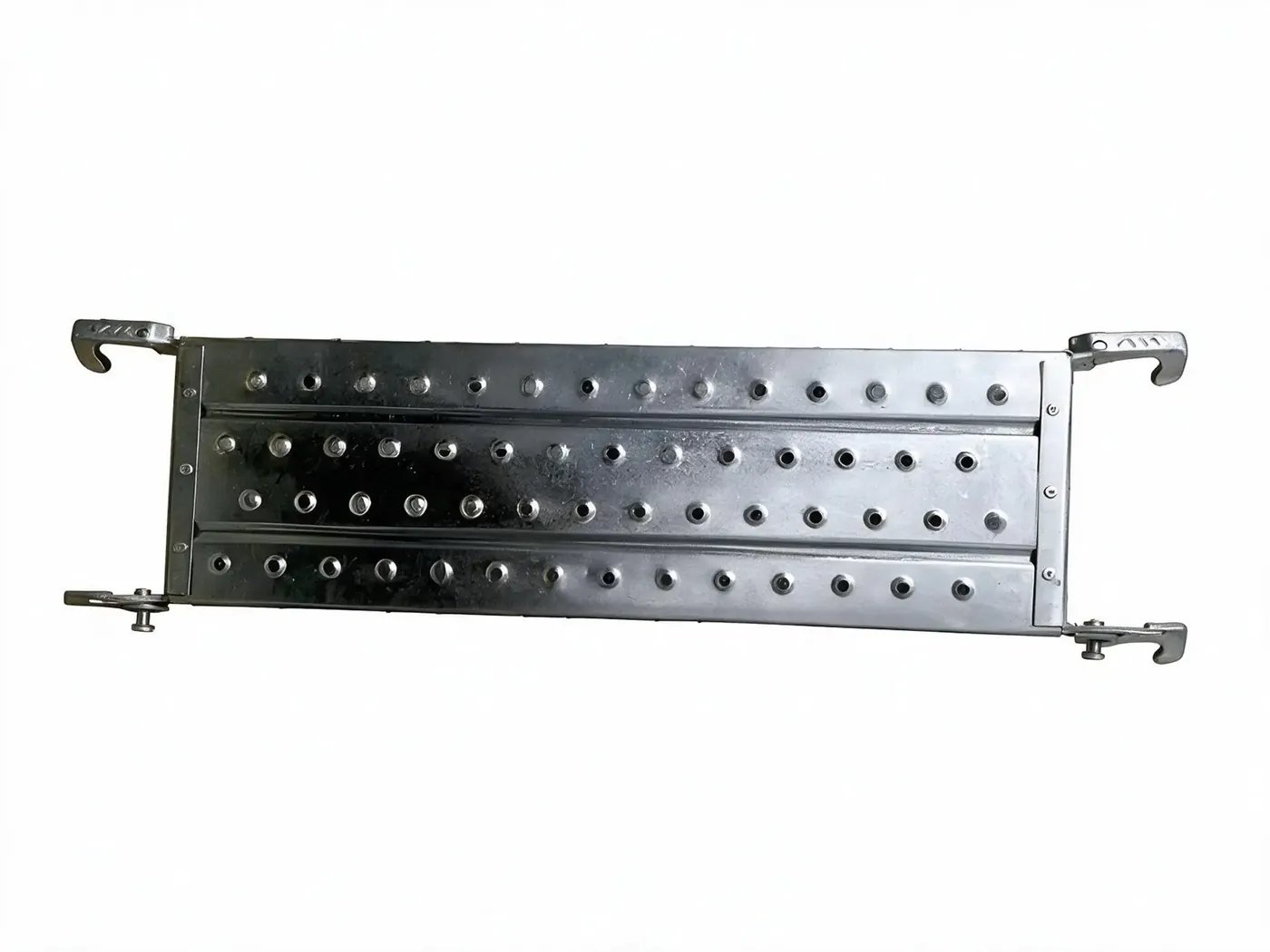
Steel planks are the most common platform in modular scaffolding. Ringlock steel planks have hook-on ends that sit directly on the ledgers and a perforated anti-slip surface. Typical widths are 210 mm to 250 mm, lengths 1.0 m to 3.0 m, and plate thickness 1.2 mm for standard duty or 1.5 mm for heavy duty.
Aluminium platforms
Aluminium platforms are a lighter alternative in systems designed for them. Their suitability depends on the product specifications and required performance.
Timber scaffold boards
Timber boards are used in some scaffolding arrangements, subject to the applicable material, condition, support and inspection requirements.
System decks
System decks are purpose-designed platform units that fit one specific scaffolding system.
These platform types are not automatically interchangeable. Their dimensions, support requirements, fixing arrangements and load ratings can differ.
How Are Scaffolding Platforms Supported?
Platforms are supported by the members specified in the system design. Depending on the arrangement, these may be ledgers, transoms, dedicated platform supports or integrated deck supports.
Correct support spacing, end bearing, fixing and edge protection all matter.
Do not assume that a platform is safe simply because it physically fits the scaffold. Its rated load capacity and installation requirements must also be met.
What Should Buyers Check When Purchasing Steel Planks?
Important considerations include:
- Overall length and width.
- Material and plate thickness.
- Rated load and support arrangement.
- Anti-slip surface.
- End hooks and securing clips.
- Corrosion protection.
- Dimensional compatibility with the scaffold system.
- Relevant test and inspection documents.
For rental companies, durability and ease of inspection may also influence the choice of platform.
7. Base Jacks, Base Plates and U-Heads
The foundation and support arrangement are essential to the performance of the entire structure.
Base Jacks: Adjustable Scaffold Supports
A base jack is an adjustable support fitted at the bottom of a scaffold standard.
It consists of a threaded steel stem, an adjusting nut and a base plate. Ringlock base jacks commonly use a 38 mm stem, either solid for heavy shoring or hollow for standard access scaffolding, with an adjustment range of up to about 600 mm.
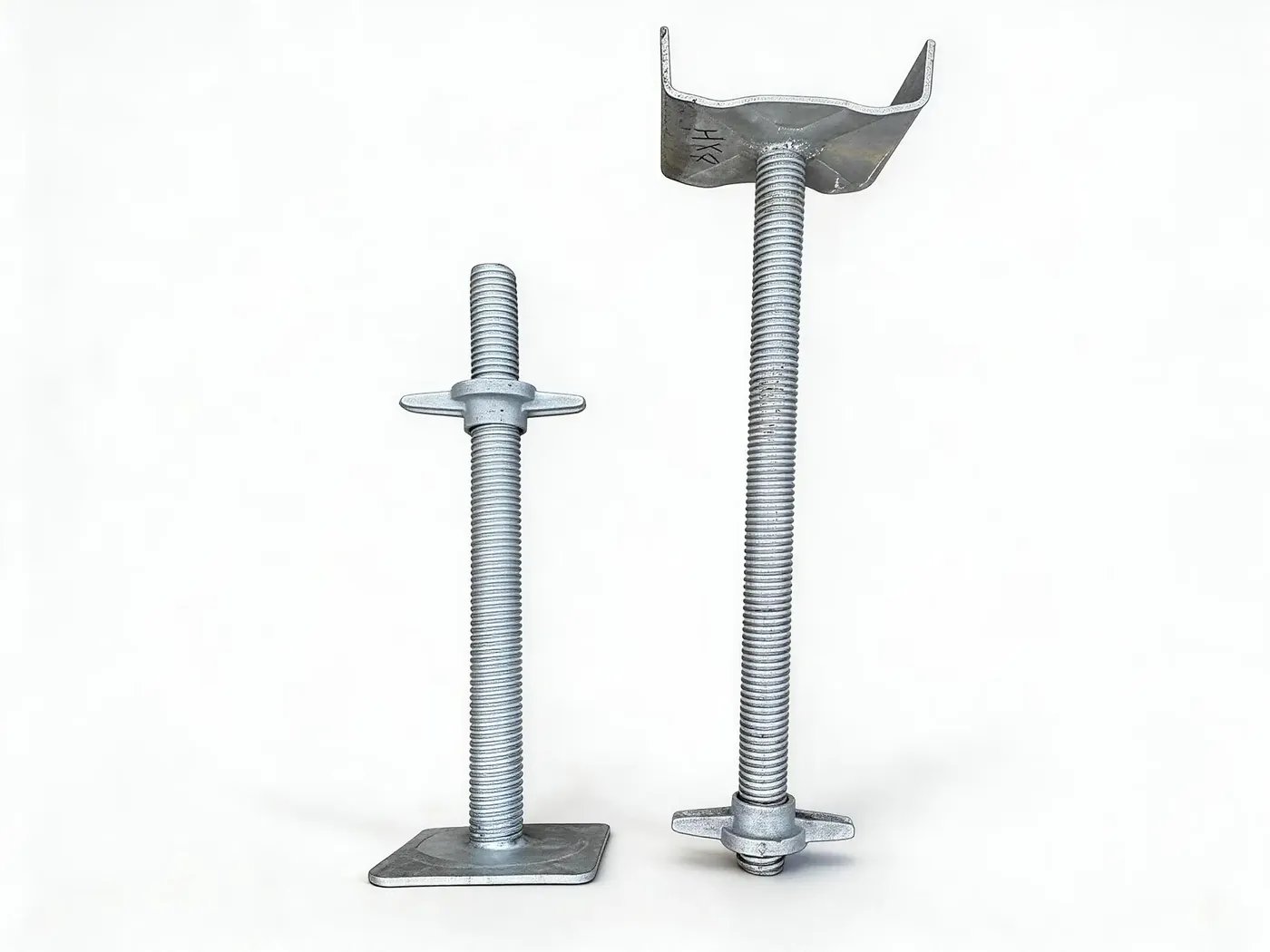
Base jacks level the scaffold on uneven ground. They must be used within the manufacturer's maximum extension and stand on a suitable foundation.
Base Plates: Supporting the Standards
A base plate provides the bearing surface between the standard or base jack and the ground. A typical base jack plate measures 150 × 150 × 6 mm.
Its purpose is to spread the load over the intended contact area. Depending on ground conditions and the scaffold design, sole boards or other foundation measures may also be required.
A base plate alone does not guarantee adequate foundation capacity. The ground or supporting structure must carry the transferred loads without excessive settlement or failure.
U-Heads and Top Jacks
U-head jacks, also called top jacks, are adjustable components used mainly in formwork and shoring. Their U-shaped head holds timber or steel beams that support the formwork.
They are not normally needed on an access scaffold. Their use depends on the type of system and the intended support arrangement.
When purchasing top jacks, confirm the stem dimensions, adjustment range, head dimensions, compatibility and intended loading.
What Should Buyers Check?
For base jacks, base plates and U-heads, verify:
- Stem diameter and length.
- Thread quality and nut operation.
- Base plate or head dimensions.
- Permitted adjustment range.
- Compatibility with the standards or support system.
- Product condition and inspection documents.
These components are part of the load path between the scaffold and its supporting structure, so correct selection and installation are essential.
8. Guardrails, Toe Boards, Ladders and Other Safety Components
Scaffolding safety depends not only on structural stability but also on proper access and edge protection.
The required protective components vary with the scaffold arrangement, the work being performed and the applicable regulations.
Guardrails
Guardrails are installed at exposed platform edges to protect workers from falls.
A guardrail system usually includes a top rail, a mid rail and compatible connections. In a Ringlock scaffold, guardrails are often ordinary ledgers fixed to the rosettes at the required heights.
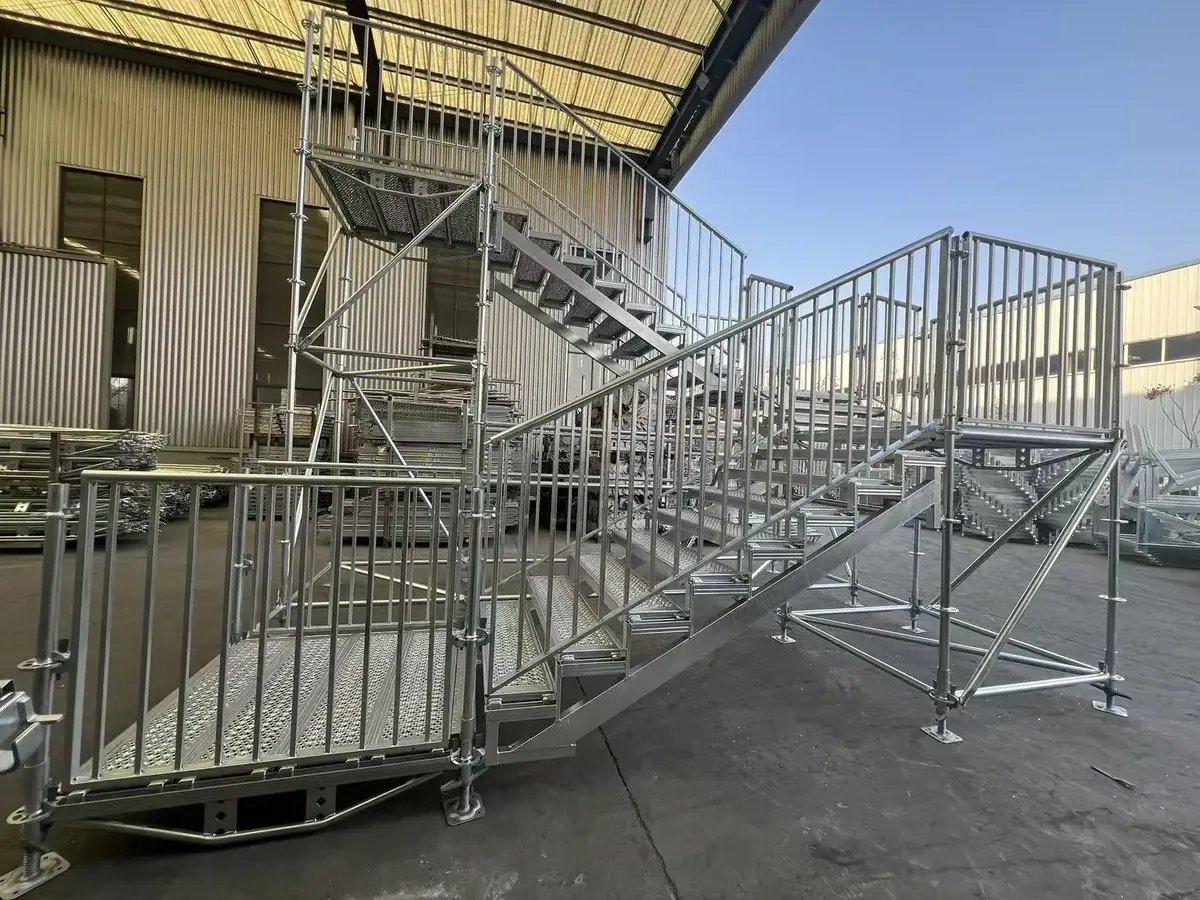
Required heights and positions depend on local regulations. In the United States, for example, OSHA 1926.451 requires fall protection on scaffolds more than 10 feet (3.1 m) above a lower level, with top rails generally between 38 and 45 inches (0.97 to 1.2 m) above the platform. Buyers should confirm the requirements for their own market and project.
Toe Boards
Toe boards are installed along platform edges to stop tools, materials and other objects from falling off the working surface.
They complement guardrails but do not replace them or any other required fall-prevention system.
Access Ladders and Stair Units
Workers need a designated way to reach each working level.
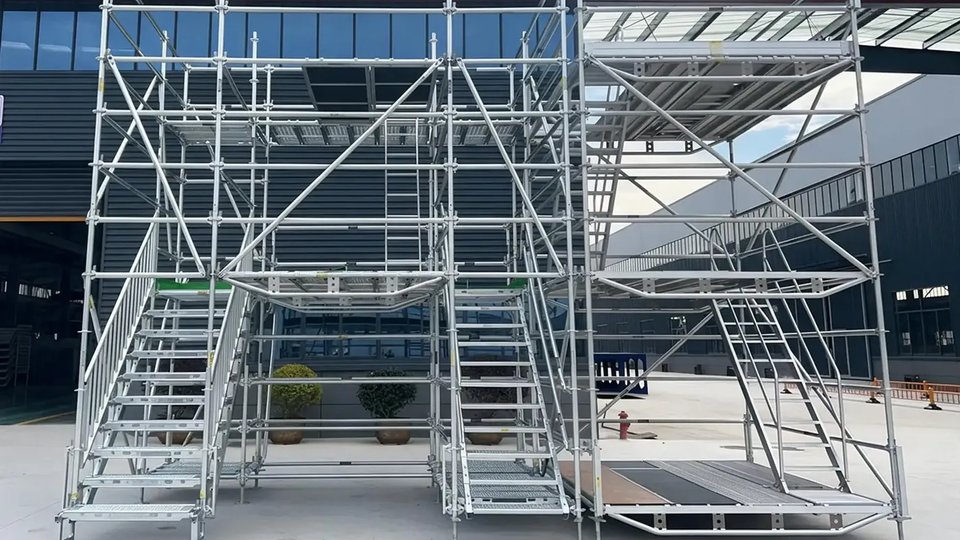
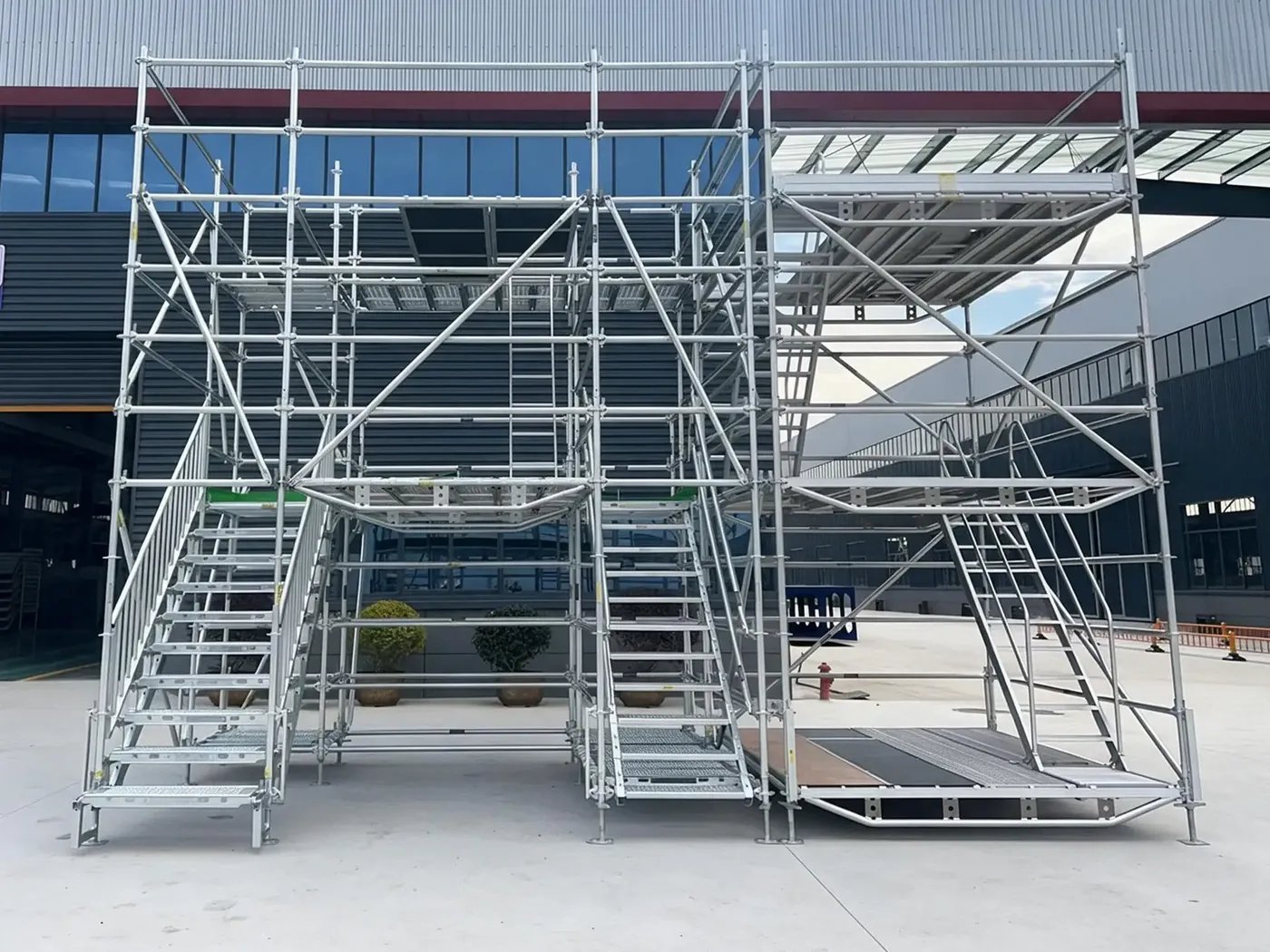
Depending on the system, access may be provided by ladders, stair units or other designed access arrangements.
When selecting access components, consider the available space, expected traffic, connection details and the project's safety requirements.
Access should be included in the scaffold plan from the start, not improvised after the main structure is erected.
Scaffold Ties and Anchoring Components
Scaffold ties connect the scaffold to the building or another designed supporting structure.
They control movement and keep the scaffold stable under the specified loads.
Tie positions, spacing, connection details and the capacity of the supporting structure must follow the scaffold design.
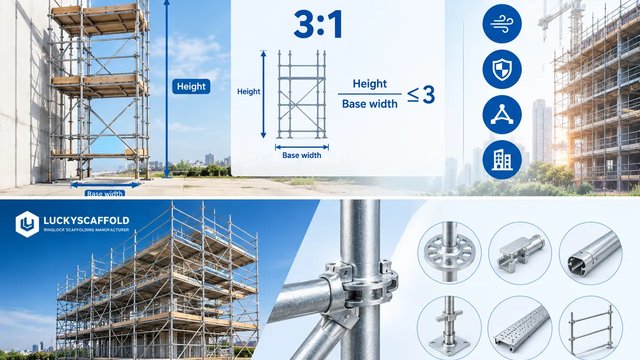
Diagonal braces do not remove the need for scaffold ties. Once a freestanding scaffold exceeds its permitted height-to-base ratio, commonly explained through the 3 to 1 rule, it has to be tied, guyed or braced to stay stable.
Why Safety Accessories Belong in the Material List
A complete purchase list should cover everything needed to assemble, access and use the scaffold as designed.
Buying only standards, ledgers and braces may leave out platforms, access components, guardrails, toe boards or ties.
Confirming the full scope of supply before ordering helps avoid missing components, delays and a costly second shipment.
9. How Do Scaffolding Parts Work Together?
Understanding individual components is useful, but a scaffold must be evaluated as a complete structural system.
The Basic Load Path
A scaffold carries loads from workers, tools, materials and other sources within its intended operating conditions.
The load path depends on the type of scaffold and its design. In a typical supported scaffold, loads pass through the working platforms and their supports into the scaffold framework.
Standards then carry vertical forces down to the base supports and foundation. Ledgers and other horizontal members connect the framework, while diagonal braces and scaffold ties provide stability as specified in the design.
The foundation must be able to support the transferred loads.
The relationship can be summarised as follows:
Working platform → Platform supports → Scaffold framework → Standards → Base jacks and plates → Foundation
This is a simplified explanation rather than a universal load path for every scaffold configuration. The actual arrangement depends on the system and the engineering design.
How the Main Components Form a Complete Ringlock System
In a Ringlock scaffold, each major component has a specific role.
Standards form the vertical framework. Ledgers connect the standards horizontally. Diagonal braces provide the required bracing. Rosettes and wedge heads form the connection nodes.
Platforms create the working surfaces. Base jacks and base plates provide the designed support at the foundation. Guardrails, toe boards, access components and scaffold ties complete the arrangement where required.
The system works only when all of these components are correctly selected, connected, supported and installed.
Why Missing or Incorrect Components Matter
A scaffold should not be treated as a collection of independent parts.
A missing brace can affect stability. An incompatible connector can prevent correct assembly. An unsuitable platform can fail under load. An inadequate foundation can undermine the entire structure.
Likewise, a scaffold built from strong individual components may still be unsafe if its overall arrangement does not meet the design requirements.
For this reason, component selection, installation, inspection and maintenance should all follow the system instructions and project requirements.
10. Ringlock vs Cuplock vs Frame Scaffolding: Are the Parts the Same?
Ringlock, Cuplock and frame scaffolding share some basic functions, but their components and connections differ.
Feature | Ringlock scaffolding | Cuplock scaffolding | Frame scaffolding |
|---|---|---|---|
Main connection method | Rosettes with wedge heads | Cup-based connection | Prefabricated frames and system connections |
Main vertical members | Standards | Standards | Frame uprights |
Horizontal members | Ledgers | Ledgers and transoms | Frame cross-members |
Bracing | System diagonal braces | System diagonal braces | Often separate cross braces |
Working platforms | Hook-on steel planks or system decks | Compatible decks or planks | Compatible platforms or boards |
Component compatibility | Specific to the system | Specific to the system | Specific to the system |
Ringlock Scaffolding
Ringlock scaffolding uses rosettes on the standards to connect horizontal and diagonal members. With connections available in several directions at every rosette, it suits complex layouts and applications that need adaptable modular arrangements.
Cuplock Scaffolding
Cuplock scaffolding uses a cup-based connection mechanism. It serves similar structural purposes, but its connectors and component details differ from those of Ringlock systems.
Frame Scaffolding
Frame scaffolding uses prefabricated frames as its main structural units. Its assembly method and component arrangement differ from modular systems built from individual standards and ledgers.
The main point is that similar functions do not mean identical components.
When buying scaffolding parts, specify the system type and confirm compatibility with your existing equipment. Mixing components without proper verification can lead to assembly problems and may compromise structural performance.
11. How to Choose the Right Scaffolding Parts for Your Project
Selecting the right components starts with the project requirements, not with the available products or the lowest quotation.
Step 1: Identify the Scaffolding System
Determine whether the project needs Ringlock, Cuplock, frame scaffolding or another system.
If the project already uses a particular system, check whether replacement components must match the existing manufacturer's specifications.
Step 2: Define the Technical Specifications
Confirm the required steel grade, tube dimensions, component lengths, connection details, surface treatment and other technical requirements.
These specifications should be consistent with the intended use, the applicable standards and the approved design.
Step 3: Prepare a Bill of Materials
A bill of materials (BOM) lists the components and quantities required for the project.
Depending on the application, it may include standards, ledgers, braces, platforms, base jacks, guardrails, toe boards, access components, ties and accessories.
A complete BOM helps the manufacturer calculate the quotation and spot missing items.
Step 4: Check Quality and Compatibility
Review the product specifications, mill certificates, galvanizing reports, inspection records and system compatibility.
If the project has specific certification or testing requirements, confirm the scope and validity of the documents before placing the order.
Step 5: Compare Suppliers Beyond Price
Compare quotations based on the same component list and specifications.
Consider the material, dimensions, manufacturing quality, surface treatment, packing, production lead time and trade term (FOB or EXW).
The lowest price per ton is not the best value if the products do not meet the required specifications.
Step 6: Request a Manufacturer's Quotation
To obtain an accurate quotation for Ringlock scaffolding, prepare the following information:
- Required components and quantities.
- Steel grade and tube dimensions.
- Component lengths and connection requirements.
- Surface treatment requirements.
- Project application and drawings, if available.
- Destination country and preferred trade term (FOB Chinese port or EXW).
- Estimated order quantity and required delivery date.
With this information, the manufacturer can prepare a quotation that matches your actual requirements.
12. Frequently Asked Questions About Scaffolding Parts
What are the main parts of scaffolding?
The main parts are standards, ledgers, diagonal braces, platforms, base supports and connection components. Guardrails, toe boards, access equipment and scaffold ties are also important where the design and safety rules require them.
What is the difference between scaffolding standards and ledgers?
Standards are the main vertical members of the scaffold, while ledgers are horizontal members that connect the standards and form the framework. Both are structural, but they perform different roles.
What are diagonal braces used for in scaffolding?
Diagonal braces resist lateral movement and keep the scaffold stable. Their number, position and arrangement must follow the system design and the applicable requirements.
What is a rosette in Ringlock scaffolding?
A rosette is a connection plate welded to a Ringlock standard, usually every 500 mm. Its eight slots accept ledger and brace heads, allowing the system to be assembled in the designed configuration.
What is the difference between a ledger and a transom?
A ledger generally runs along the scaffold and connects standards in the horizontal framework. A transom generally runs across the scaffold width and may support platforms, depending on the system design.
What is the difference between a base jack and a U-head jack?
A base jack sits at the bottom of a standard and adjusts the scaffold to the ground level. A U-head jack sits at the top of a shoring or support system and holds beams or other members.
Are Ringlock scaffolding parts interchangeable between manufacturers?
Not necessarily. Components may look similar but have different dimensions, connector designs, materials or tolerances. Verify compatibility before combining products from different manufacturers.
Which components are required for a complete scaffolding system?
That depends on the scaffold type, design, intended use and applicable regulations. A complete arrangement may include standards, ledgers, braces, platforms, base supports, access components, edge protection, ties and other accessories.
How do I calculate the number of scaffolding components required?
The quantities depend on the scaffold dimensions, bay spacing, lift arrangement, access requirements, platform layout, bracing, ties and other design details.
For a specific project, use the approved scaffold drawings and the matching bill of materials. A manufacturer or qualified scaffold designer can help review the component requirements.
What should I check when buying Ringlock scaffolding components?
Confirm system compatibility, steel grade, tube dimensions, component lengths, connection design, surface treatment, quality documents and quantities. Also check that the quotation includes every necessary component and states the agreed trade term (FOB or EXW).
13. Choose the Right Ringlock Scaffolding Components for Your Project
Understanding scaffolding components is the first step toward buying a reliable and suitable scaffolding system.
Standards, ledgers, diagonal braces, rosettes and platforms each serve a different purpose. Base supports, connections, access equipment and protective components are just as important to the complete arrangement.
For international buyers, the key is to select compatible components that meet the project's technical requirements, rather than comparing individual products by price alone.
LuckyScaffolding manufactures Ringlock scaffolding components in Nanjing, China, with an annual output of 36,000 tons, for construction contractors, distributors, rental companies and other professional buyers.
Whether you need standards, ledgers, diagonal braces, steel planks, base jacks or a complete Ringlock scaffolding package, send us your material list or project drawings and our team will prepare a quotation for your component specifications and order quantities.